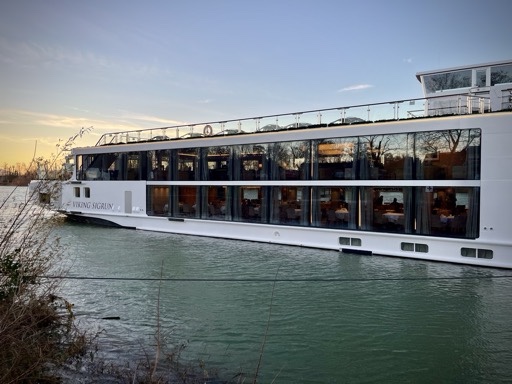
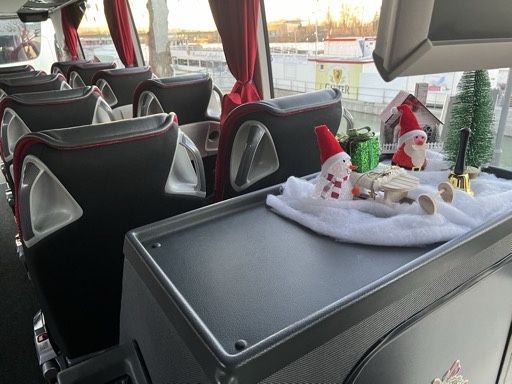
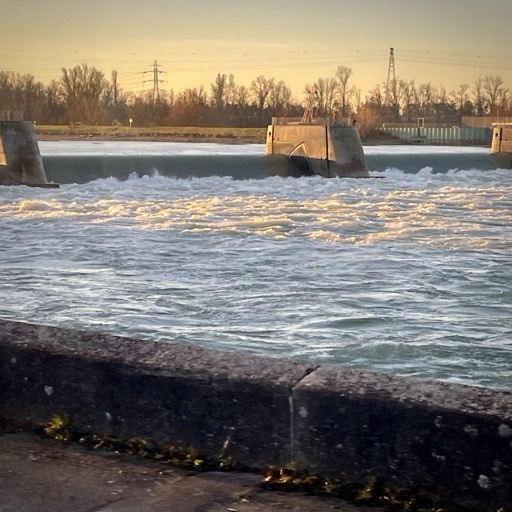
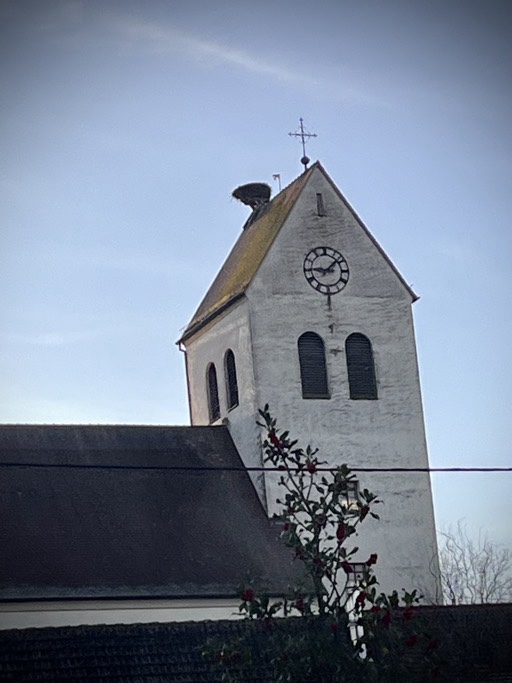
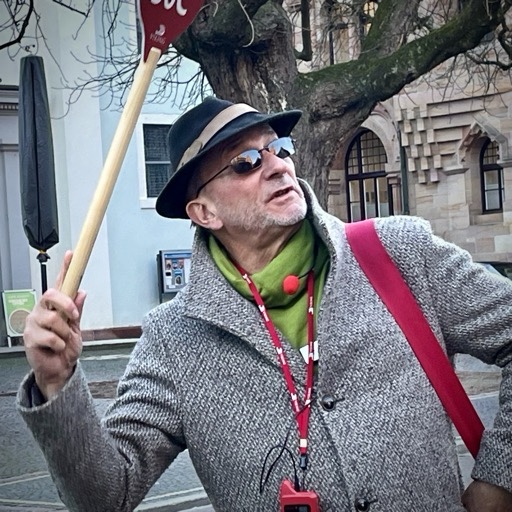
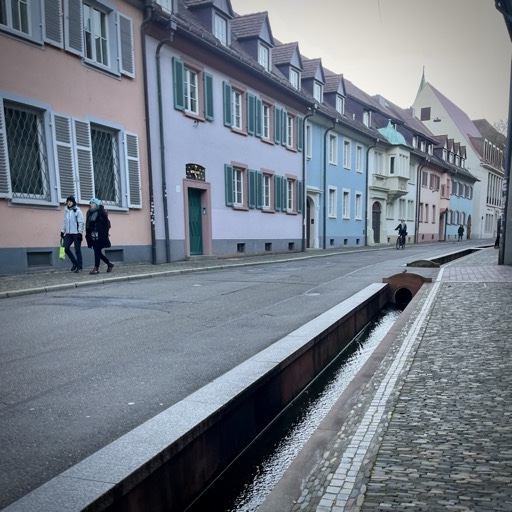
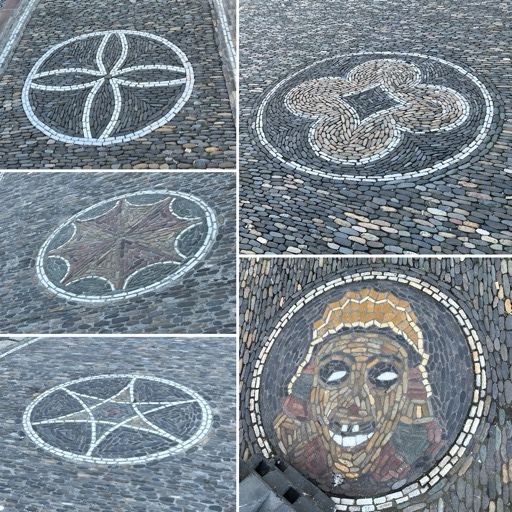
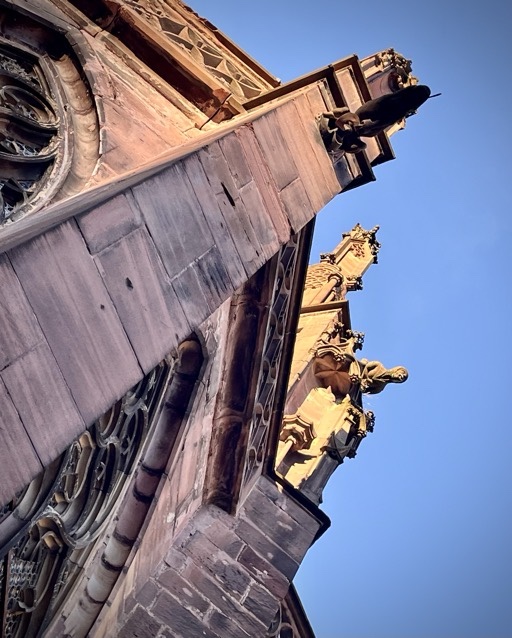
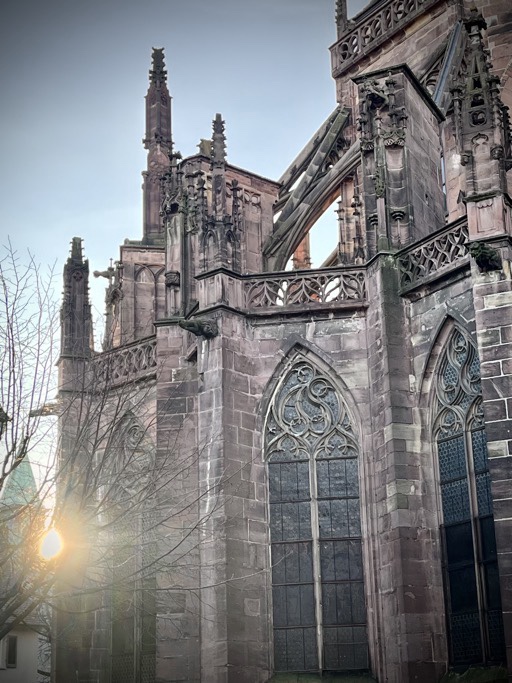
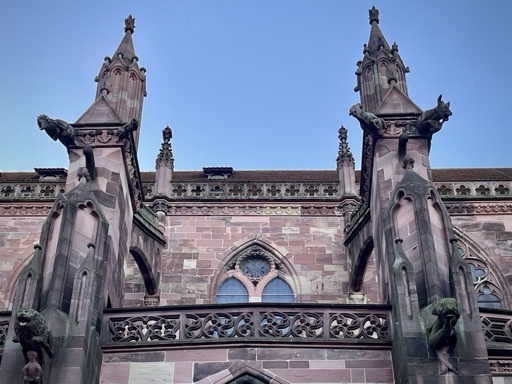
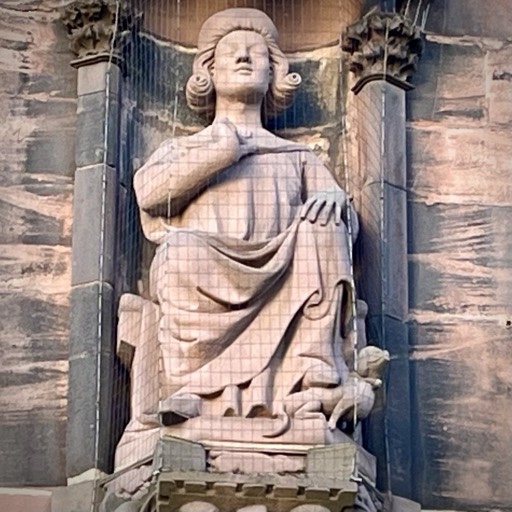
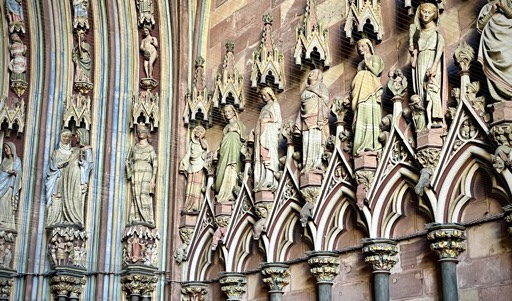
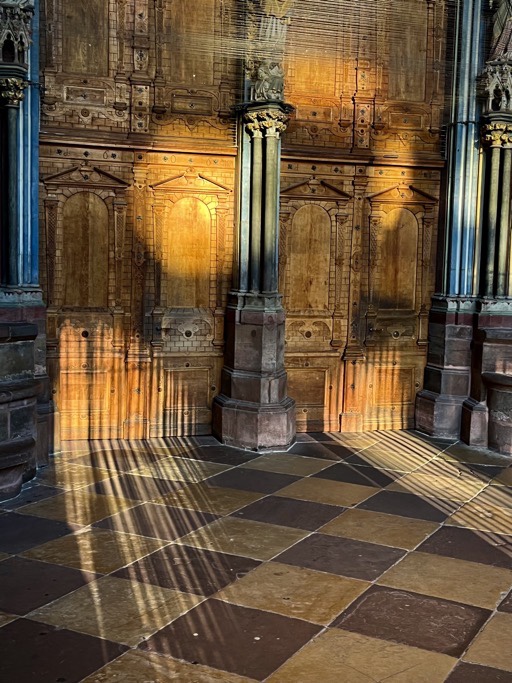
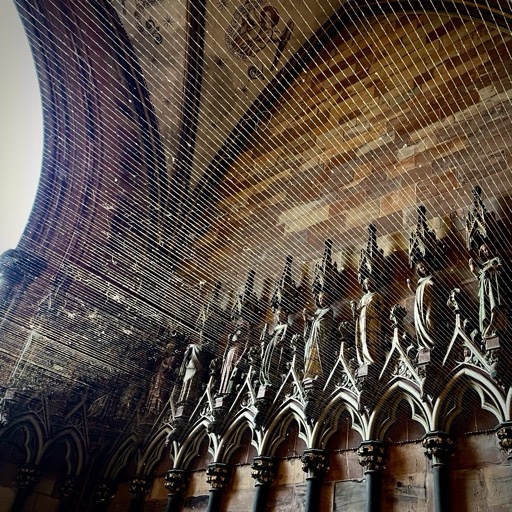
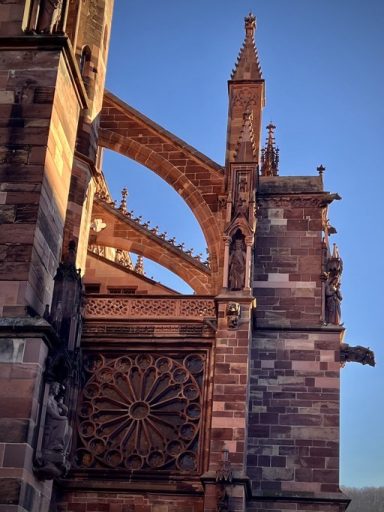
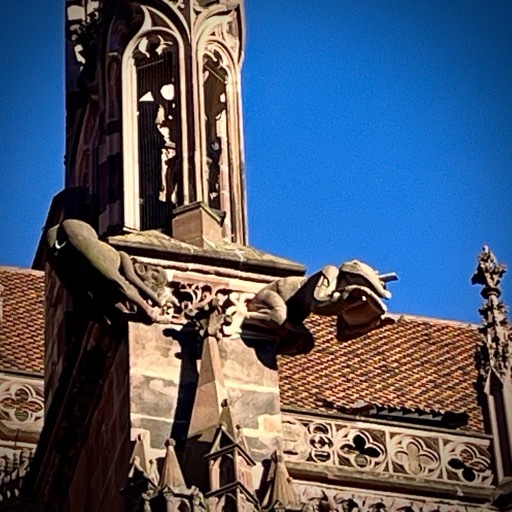
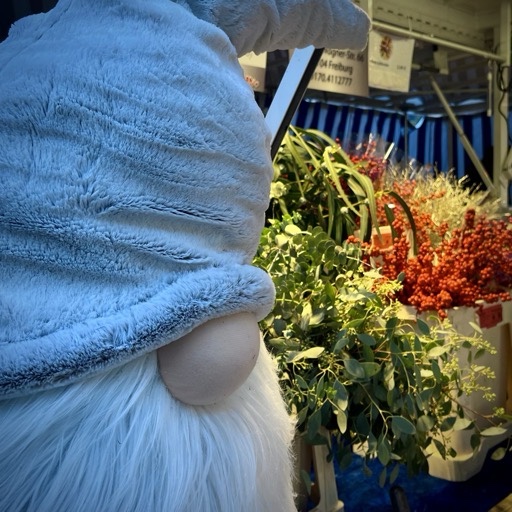
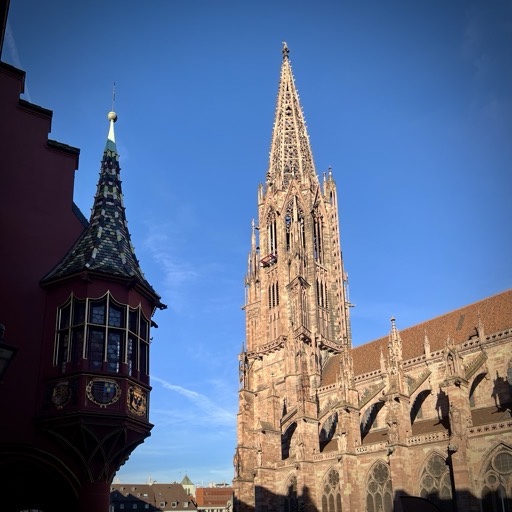
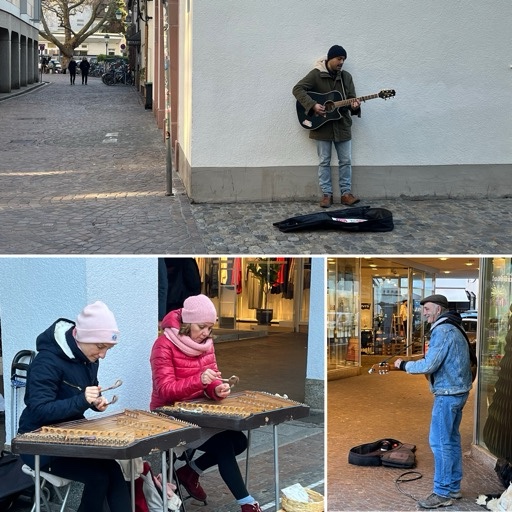
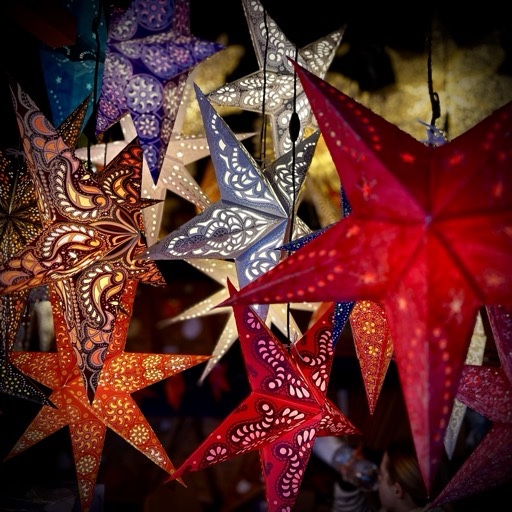
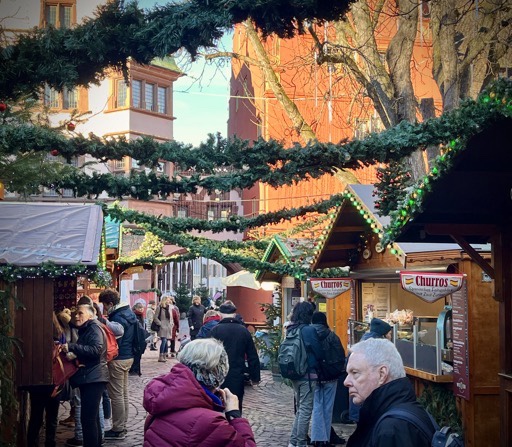
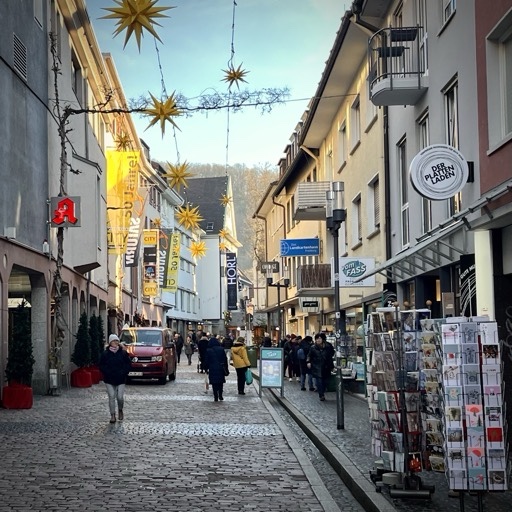
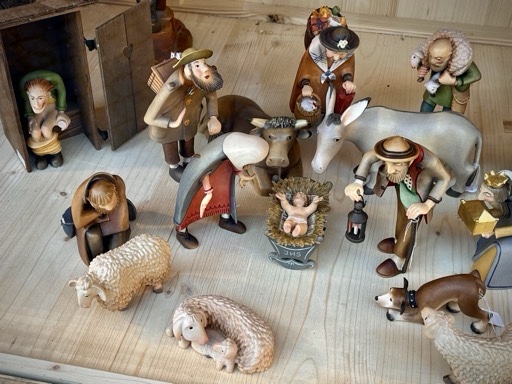
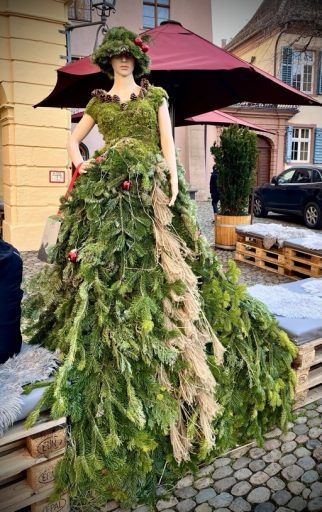
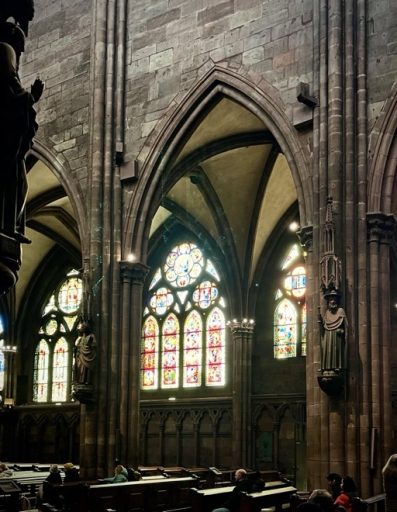
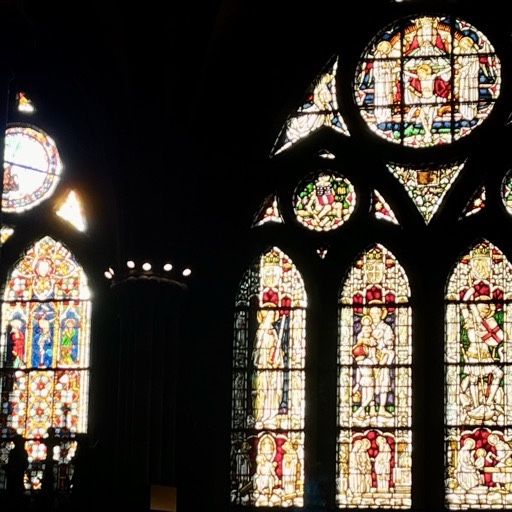
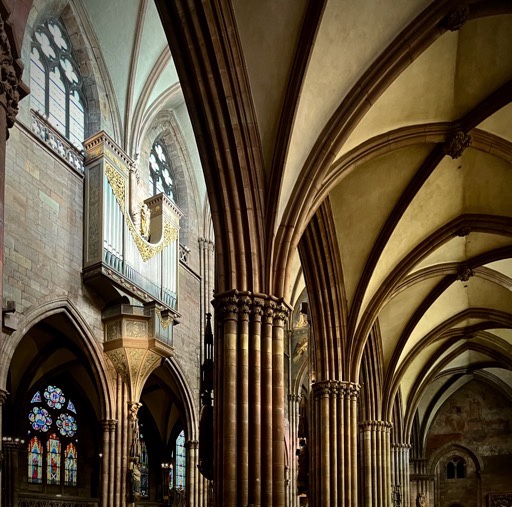
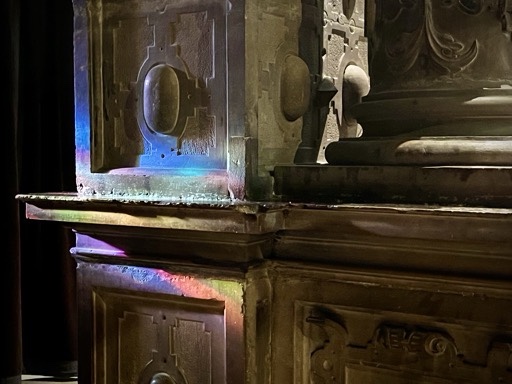
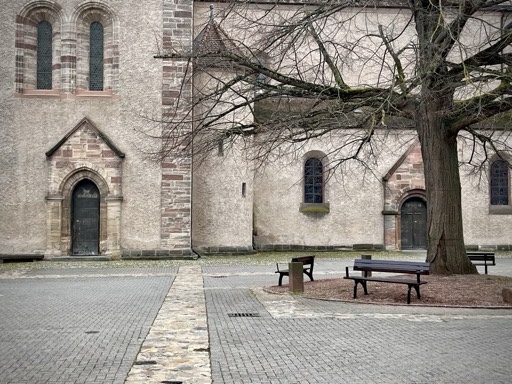
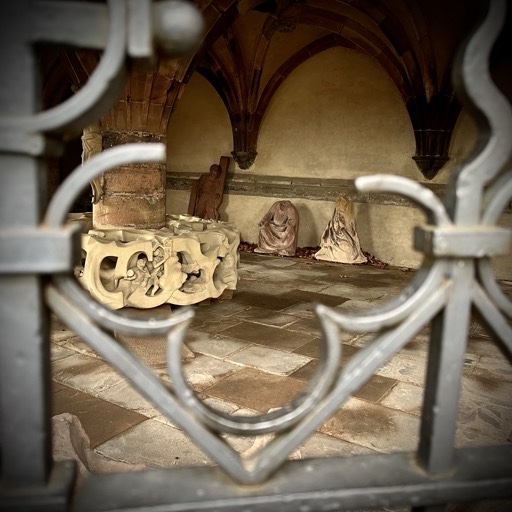
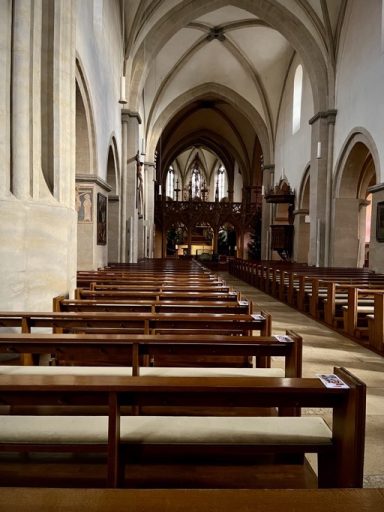
Good morning Sigrun!Even our bus was decorated todayThe river is still very fullAnother stork nest on the churchWalter, a really interesting guideThey have small canals running through the citySidewalks has art inSunriseGargoyles!A dachshund at her feetThe gargoyle on the left has a definite opinion Farmer’s Market- not the farmerLots of street musiciansBest nativity ever. (Top left)Inside the cathedral for the organ recitalStained glass light
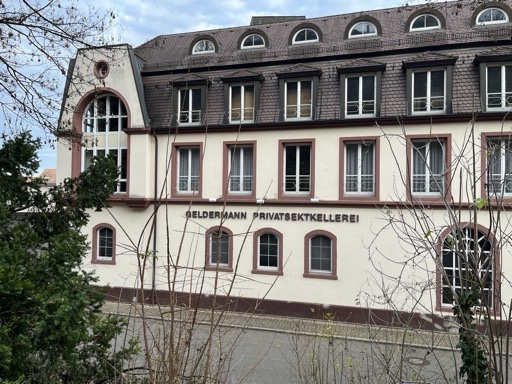
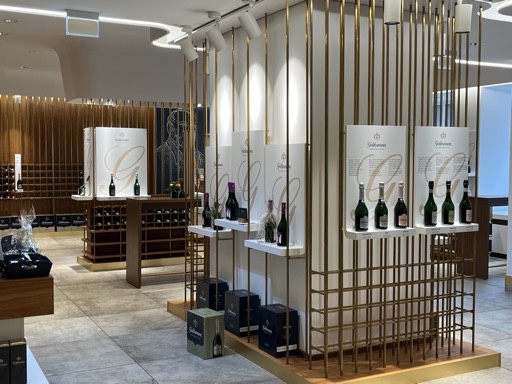
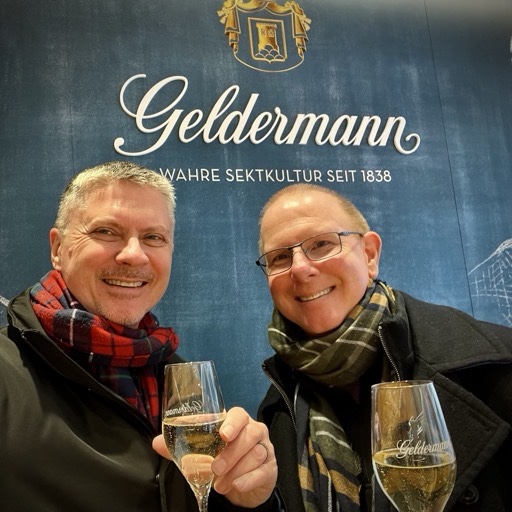
We did our own walking excursion to Breisach. All to go to the ‘champagne’ cellar. No tours, but we were at least able to do a tasting.
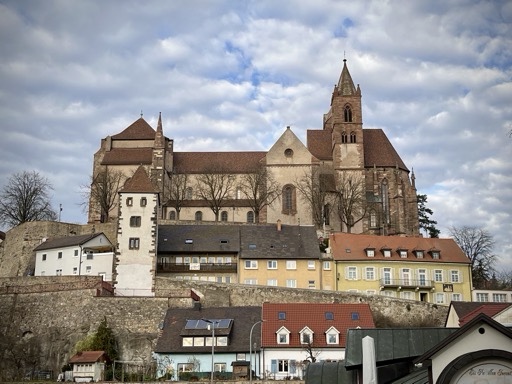
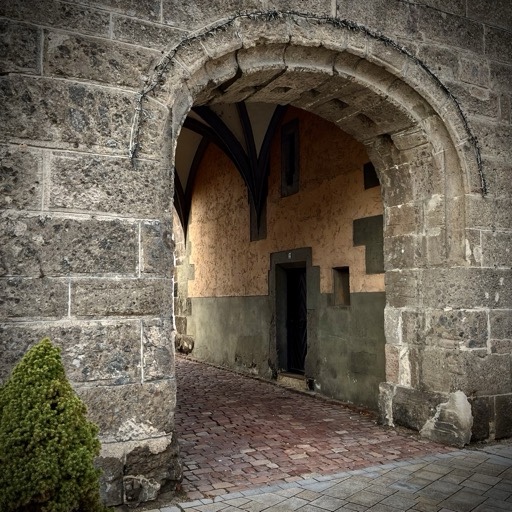
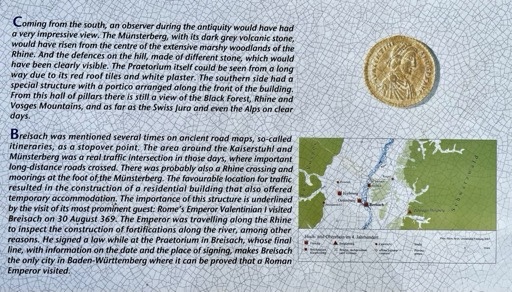
The history of Breisach reaches back over 4000 years. The Münsterberg (Minster Hill) was the seat of a Celtic principality then a Roman castle and, since the early Middle Ages, was the centre of the up-and-coming city with its market rights and right of coinage, with formidable city defences, of which some wall and a few gates are still visible, and which provided a home for many monasteries.
The city’s prosperity over many centuries, and its importance as a traffic hub and trading city, is due to its location on the Rhine, and the bridge across this river. In the 17th and 18th centuries Breisach, under Habsburg and French sovereignty, was one of Europe’s most important and strongest fortified cities.
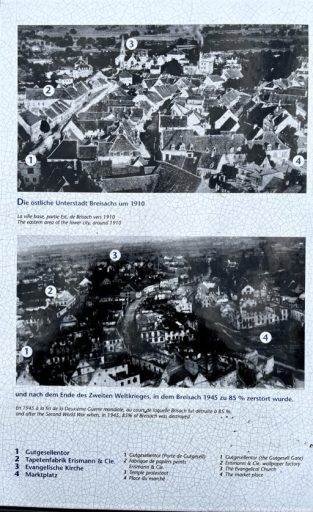
The fortifications were razed in the mid-18th century, and the city itself was almost completely destroyed by French bombardment in 1793. 85% of Breisach was destroyed again at the end of the Second World War in 1945. In 1950, surrounded by rebuilding work, this was the first city whose citizens expressed their wish for the formation of a united Europe
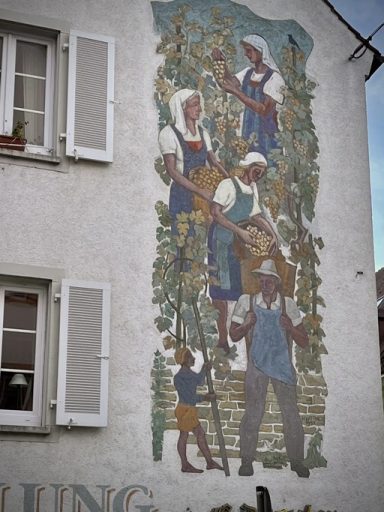
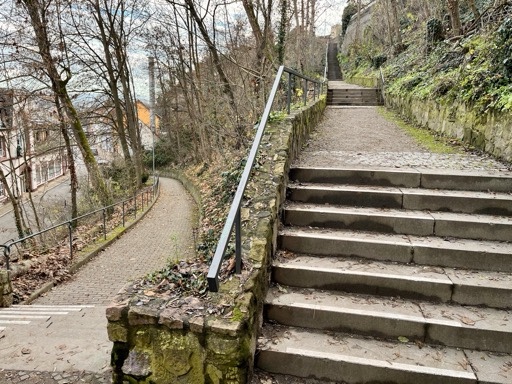
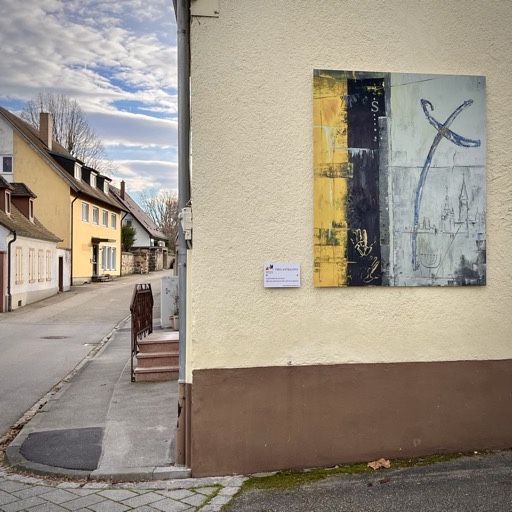
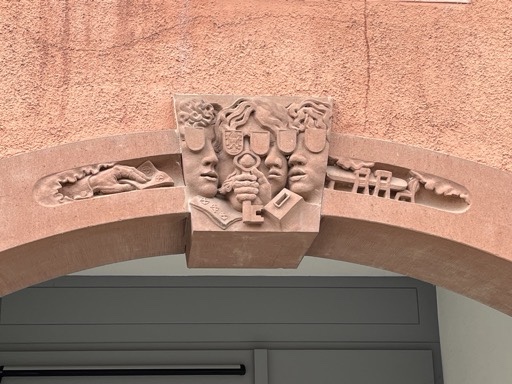
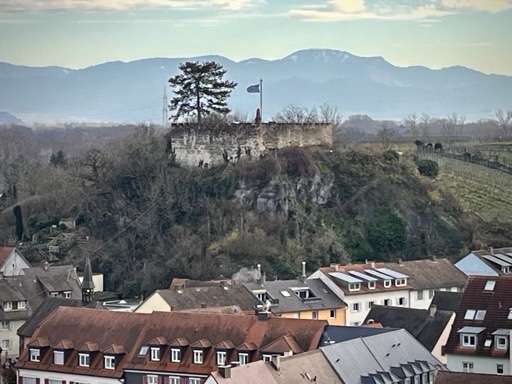
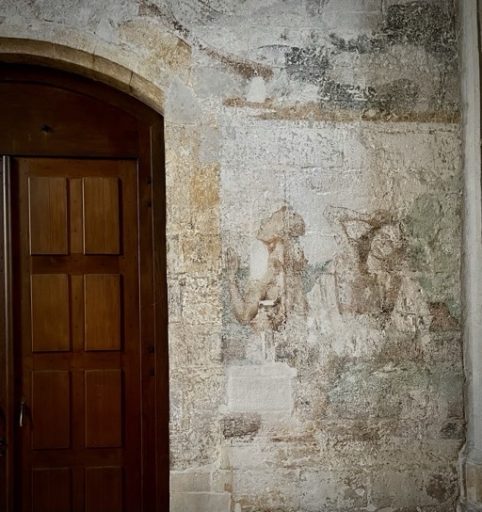
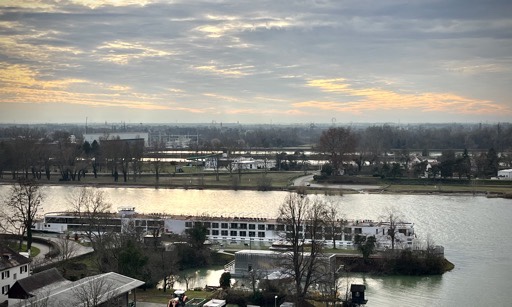
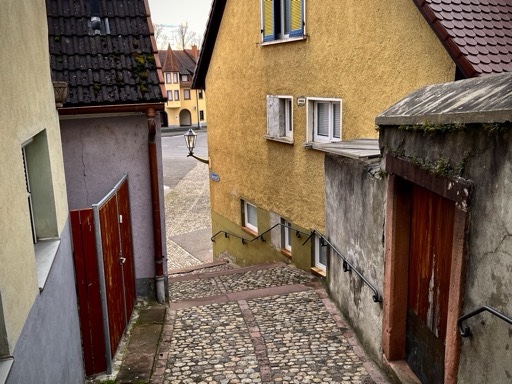
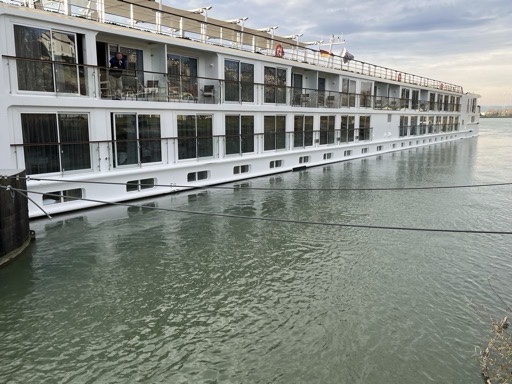
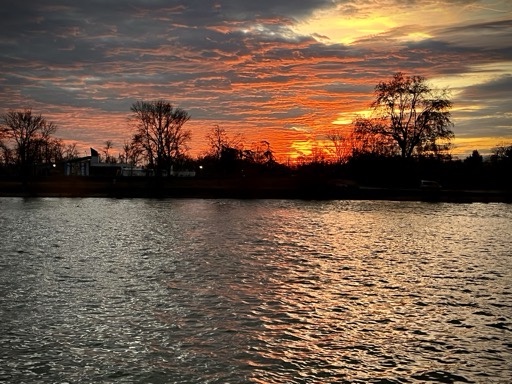
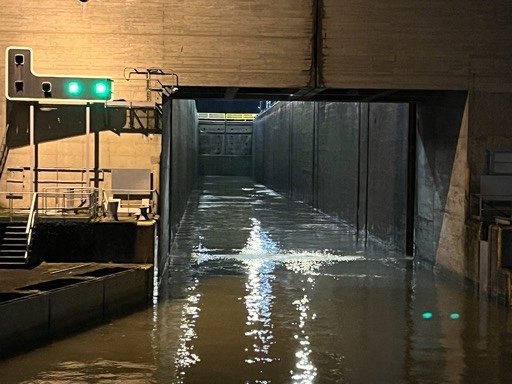
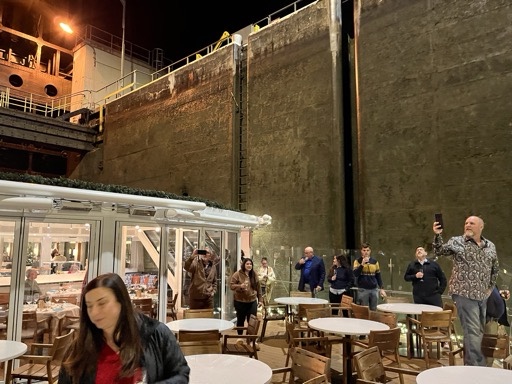
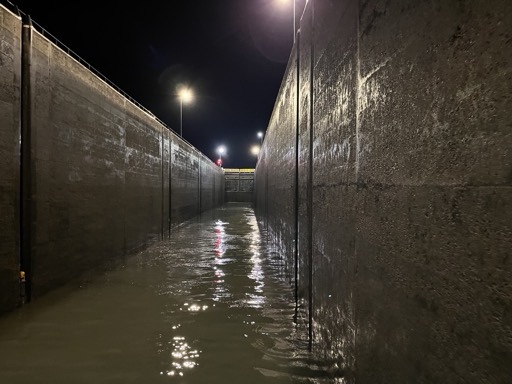
Münster on the hillIt is ‘sekt’, and not ‘champagne’Art in streetsAre those The Beatles?85% destroyed Very old churchFrescosOur ship from up highWelcome backLast sunset on this cruiseEntering the lockInside the lockThe lock
Lucerne, even in the cold light rain, is beautiful. Our guide took us first by bus to the station and then we went for a walk around the old town. It is charming and interesting. No wonder this place has been a tourist destination for hundreds of years.
Goodbye Viking Sigrun!Hotel Schweizerhof Hotel SchweizerhofThe Throne roomsLuzernOur bubbly tour guide YvettePat & Jim staring at pastriesWe started by taking the bus to the stationWilkommenUnder the stationWe had a tasting of Swiss chocolate The Chapel BridgeOur chestnut vendor and PatChapel BridgeThe Baroque Jesuit ChurchUbiquitous Christmas Markets Queen Victoria stayed in the small blue building on the right. In preparation for her promised return, they built the Gutsch. She never did. The Spreuerbrücke with its paintings from the 1400’s. Different view of the cityMardi Gras starts officially at this fountainLunch at Des Alpes HotelrestaurantWalking ivermectin the Chapel BridgeThey found out it was someone that smoked a cigarette. Smoking is now banned on the old wood bridges. Stopped in a tiny place to get out of the rainDinner with Pat & Jim
After a few stops, it is a ferry after all, we made it to our final stop: Vitznau
This is where we board the first cogwheel train in Europe, and the longest continuously running one. So much so, that when they needed new cars they had to custom build them to fit the cogs in the tracks.
We went all the way up into the clouds to the top of Mount Rigi.
It took us about 50 minutes to make it to the top with the train. Prior to the train Queen Victoria was carried up. No idea how long that took.
It was fun being on top of the mountain. It was a lot colder and the wind blew snow around.
Then we descended to Station 7 where we had a wonderful, and warm, lunch. We even had ‘Swiss Coffee’ afterwards. Now that will warm you.
We descended down a different track back to the lake.
Good morning, LucerneOur great and enduring tour guide JuttaSunriseOur hotel from the ferryThe composer Richard Wagner’s houseOur destination, Mount RigiThe cog trainUp we go!No cars up here of course. Into the clouds we goIt is freezing up here. More cowbell in the gift shop on topWalking in this to the restaurant Baby snowmanWarm and cozy in hereHow a cog train worksA little ‘Swiss Coffee’ from Alex before we brave the cold outsideThe clouds moved for a momentA second gift from the Japanese tour groupTaking the older one downOn our way down.
The town might have been small, but the monastery was huge. It was originally built about a fountain that had restorative water, and a lot of people undertook pilgrimages here.
Eventually a huge Baroque church was built here with the monastry surrounding it.
There were at some point hundreds of monks living here, and now there are about 20 left. As the guide stated: “Not a modern career path for young people anymore.“
The church itself was not only the largest and most ornamental Baroque church we have seen in all our travels, but it also has one of the few ‘black Mary’s’ recognized worldwide.
The front facade of the grounds of multiple acres. A photo can not convey the sheer size of this space. One of the ceiling panelsTime-out in the corner?The famous Black MaryWalking the groundsMaking new friends everywhere The fountain that started it allFilling up my water bottle of course! Every blessing counts.
Off we go to a small family dairy farm to get a little up close and personal with the main ingredient of Swiss cheese: milk.
It was a sweet and way too up close experience.
This was followed by going to a local cheese producer where we not only see where and how cheese gets made, but we get to make our own cheese.
How awesome is that!
And we get to take it home. Not sure where we can fit in 5 pounds of cheese in those suitcases!
And they have a definite aroma.
Definite.
The abbey next door where the nuns live. A true Swiss farm VealerI like cow butts and I can not lie. You other brothers can’t deny. Baby was born that morningShe ruled this farm and owned the tourOur cheese making guide FrancescaDrinking whey. Tastes like drinkable yoghurt. Our cheese making faux-chaletThe milk was boiled prior to our arrival. Pieter cutting the milk with a curd harpDressed for the factory tour while our curds get cut some moreSeeing how cheese gets madeThe storage smelled so goodKenn couching the curdsIn the form it goes to drainSampling while we wait for it to drainCheese is done drainingIris showing the result after we formed the small wheels. What our cheese will end up, and what we left with Cheese fondue for dinner.
The scenic train ride through the Alps from Lucerne to Milan elicited never-ending ghasps and pointing and appreciation.
Frustratingly, we kept on trying to take photos of the scenery but the refelctions and triple glass of the train thwarted our best efforts. It was still an awesome ride.
We had to change trains in Lugano, and a short while later showed up in Milan.
If you ever show up for the first time in your life to Milan, start at the main train station. An impressive building of rare magnificence.
“They told me that when Frank Lloyd Wright came to Milan, and he came only once, he was really impressed by it and said it was the most beautiful station in the world. For me it is also more beautiful than Grand Central Station in New York. I know few stations like this one”.
First stop was finding our hotel right next to the Duomo and leaving our luggage to go explore.
It is hard to relate the sheer number of people at the Christmas markets around the Duomo, the breathtakingly massive ‘shopping center’ Galleria Vittorio Emanuelle II, and all the high-end shops on the last Friday before Christmas.
Goodbye Schweizerhof!Lucerne train station Last minute shopping – more chocolate!Our train!We have a whole car to ourselves!Breakfast mimosas sans juiceMenu vs. RealityLuganoToast in Switzerland and then Italy minutes apartPuppies on the train.
I snuggled them so hard!
Milan. StationSubway is not as grandIt is truly stunningOur cute artsy hotel with a view of the Duomo, if you lean far enough out of the window. They are in the process of restoring and preserving it. The cleaned marble is the most wonderful hues of pink and white. The ‘little’ shopping center
It might be a zero waste restaurant in a completely green building, but interestingly enough all the food is sourced within an hour’s drive of the restaurant to reduce the carbon footprint and help the local farmers.
There is a lot more wonderful things about this place of which the very least is their Michelin star.
Night falls in MilanoEverybody wants to be a modelStreet musicSneakies before dinnerThe kitchenOur sommelier Andrea (and Kenn) used to work with George Miliotes at Disney. It’s a small world after all. Only a small sample of the many courses.
The trout main dish was designed around elements of the river to honor the fish.
The utterly charming Elia serving usWobbling back to the hotel
The whole church is a UNESCO site, but what is left of the painting now is so fragile that we had to go through three air-locks to get in. The group was also only allowed to be in there for 15 minutes exactly. Then two more airlocks to get back out.
Early morning MilanRandomSanta Maria delle GrazieEliza, the tour guideView of the church and monastery What it looked like after the warHow they protected the wall with the paintingThere it isThe full dining room
In the Last Supper, done between 1494 and 1498 on the north wall of the refectory of the Santa Maria delle Grazie convent, Leonardo renewed the traditional imagery of the Cenacle, choosing the dramatic moment of doubt, when it is not yet known who will betray Christ and the souls of the apostles are deeply shaken. Не also renewed the painterly composition and, with an extraordinary use of perspective, created a sense of continuity between the real space and the painting space.
The Last Supper was not done with the traditional technique of “good fresco”; on the dry wall Leonardo experimented with a technique similar to that used for painting on wood, ideal to get the best rendering of chiaroscuro effects and to allow slow and meditated progression suited to making changes. The work also proved extremely fragile because of unfavourable environmental conditions: a few years after completion it already showed signs of the ineluctable process of deterioration.
In 1799, under the laws of the Cisalpine Republic, the convent was suppressed and the Cenacle used by the Napoleonic army as a stable and barn.
Since 1934 the Cenacle has been a state museum, while the convent has gone to the Dominican fathers. In 1943, during World War Two, a bomb caused the collapse of the ceiling and east wall of the refectory; the Last Supper was saved thanks to the protection put in place at the beginning of the war and prompt reconstruction work.
Over the centuries the fragility of the Last Supper has made restoration work necessary several times, often proving harmful. The last restoration (1978-1999) removed layers of colour, glue and materials added in previous restoration work, recovered the painting fragments by Leonardo. To guarantee its conservation a sophisticated protection system safeguards the painting against big variations in temperature, dust and polluting agents.
The wall on the opposite side. Not Leonardo’s. He was supposed to also paint this wall but took so long with the other one that they asked Giovanni Donato to do it. Inside the church
On our walk back we stopped for a light lunch at Castle Sforza and wandered the extensive grounds.
After some meandering along the city streets we got to Teatro La Scala. Sadly, they were doing a rehearsal and we were not allowed to tour the theatre itself. We ended up getting tickets for the museum portion only.
What an interesting museum dedicated to the famous stars of the operatic era.
About a third of the museum was dedicated to the great Maria Callas. She changed modern opera with her amazing voice.
Callas was a foreigner in a world of mediocrity.
Drinking fountains with crisp cool water. Castle SforzaThe entrance to the theater from the sideTheatre MuseumA third of the museum was dedicated to Maria Callas. Drinks at Teatro alla Scala Il Foyer. (The foyer bar.)