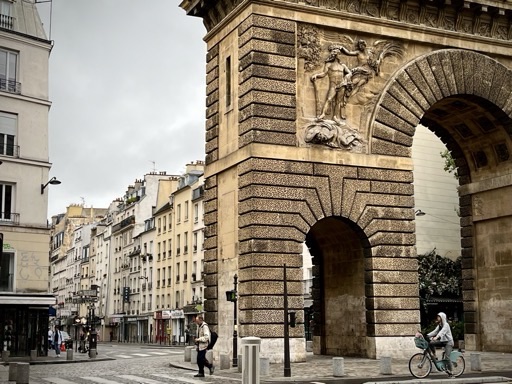
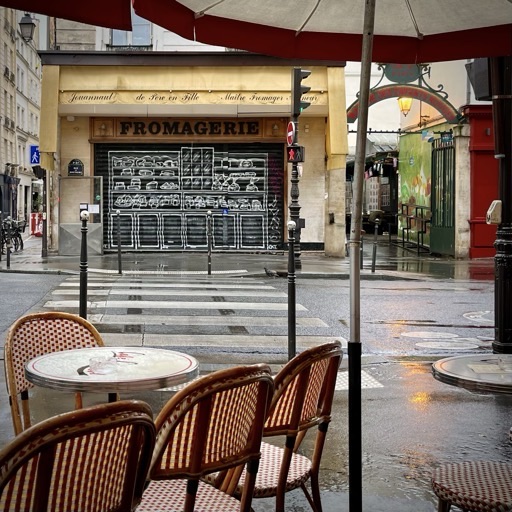
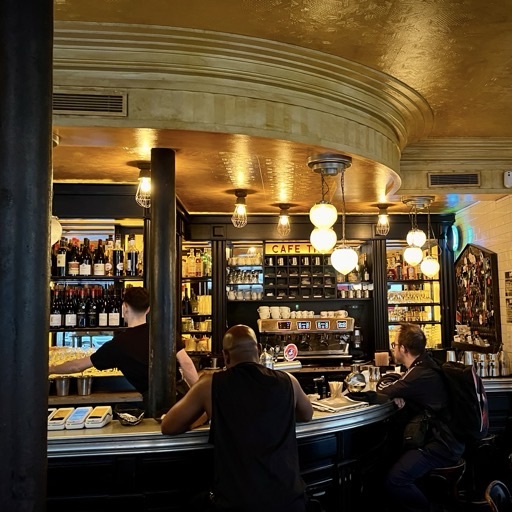
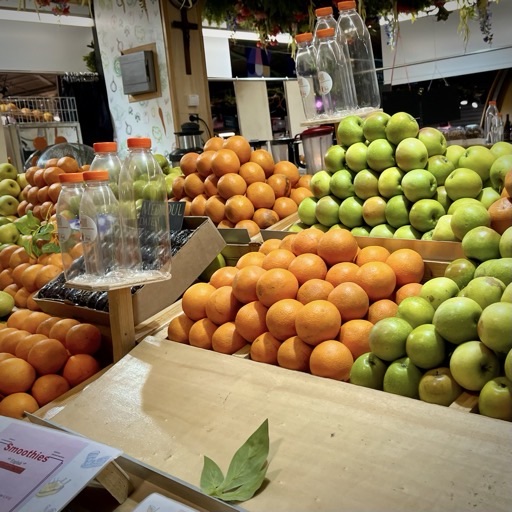
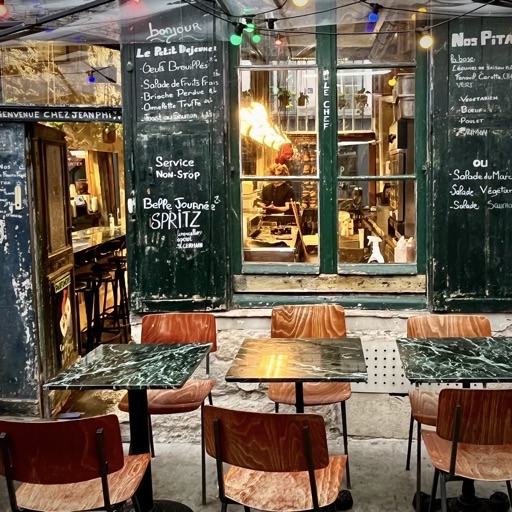
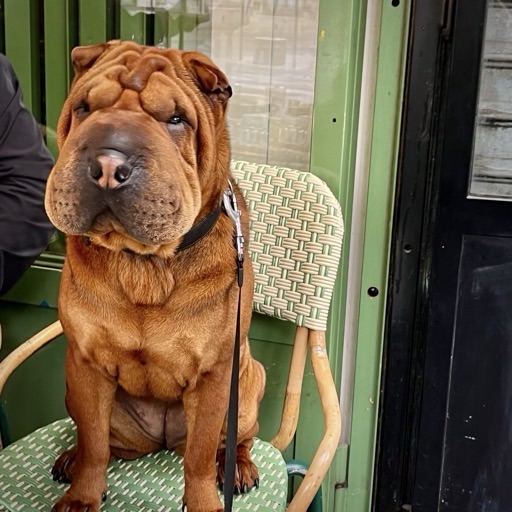
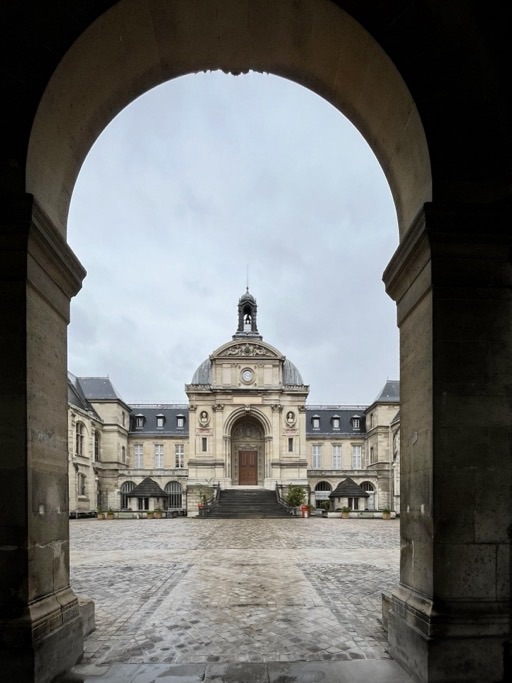
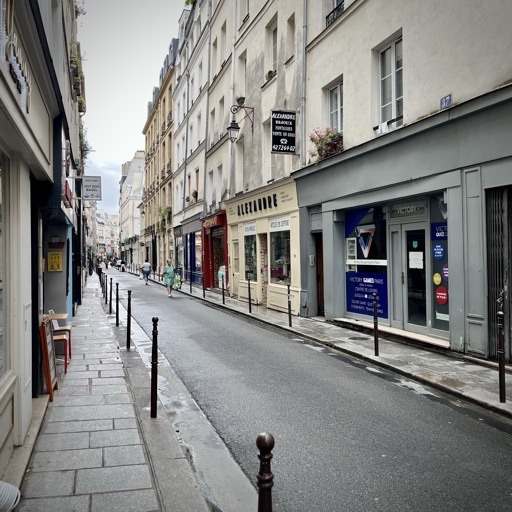
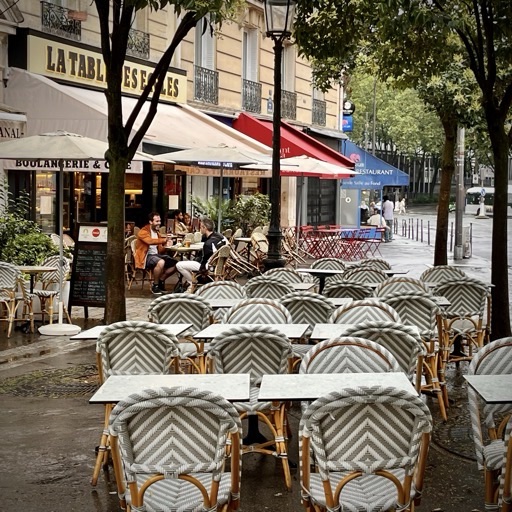
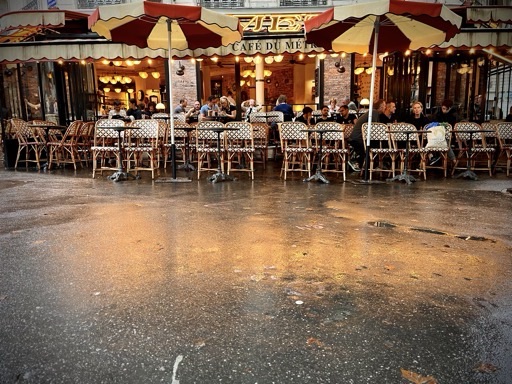
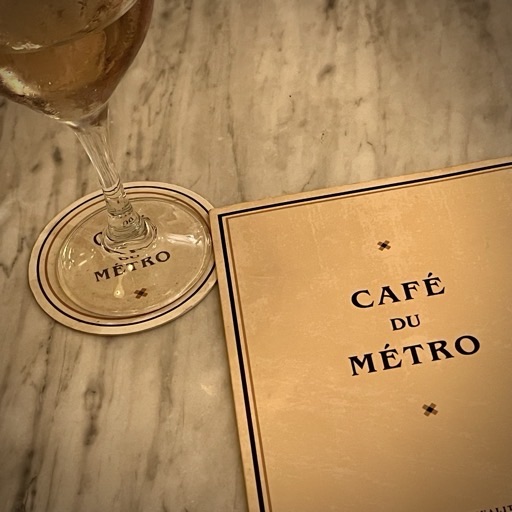
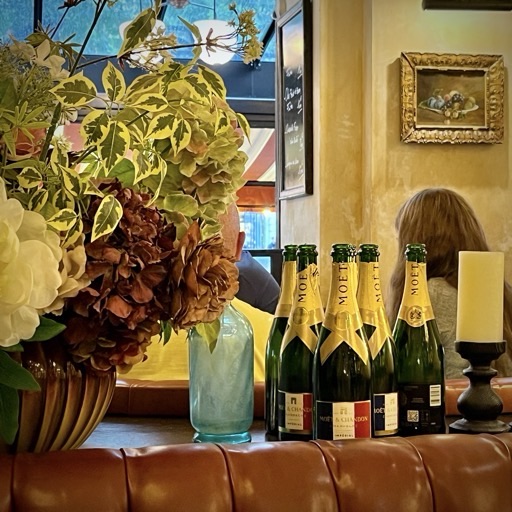
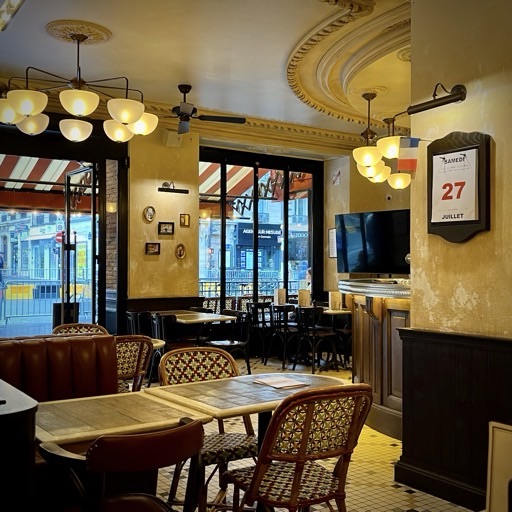
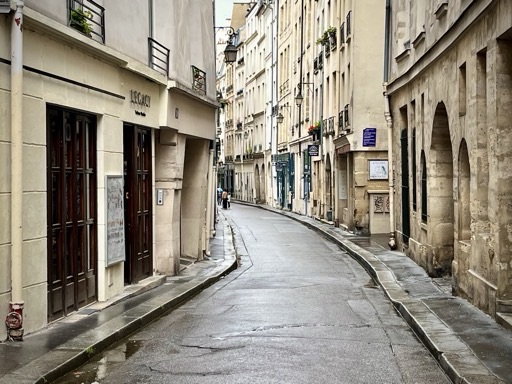
We got there a little too early and most stalls were not even open yet. Since we were ‘a little damp’ at this point, we decided to dry out in a small french cafe watching people in the rain.
After a second peek in the market we headed back.
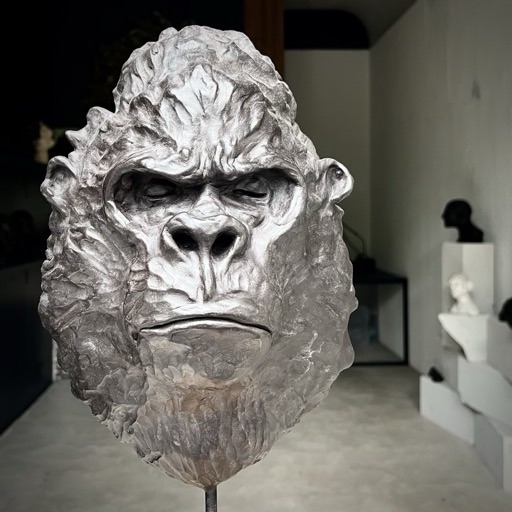
Looking at the market from our coffee shop.She just woke up and was waiting for her morning ‘coffee’Monkey see…
Two of us went on a lunch date while the rest went exploring.
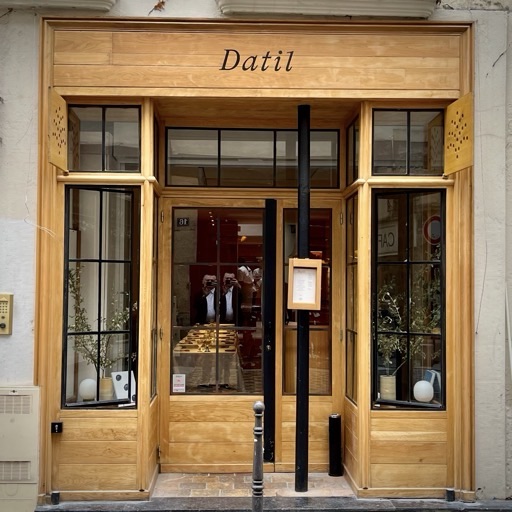
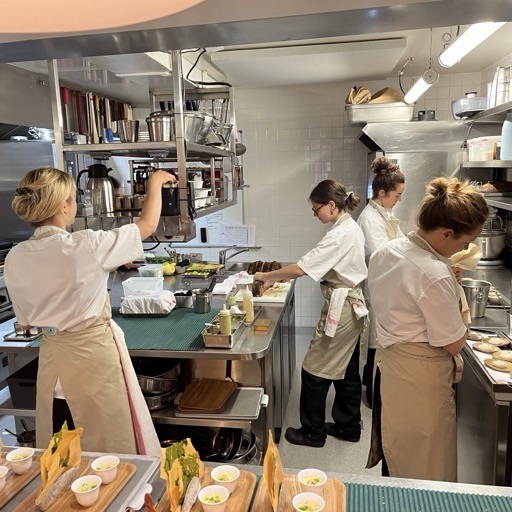
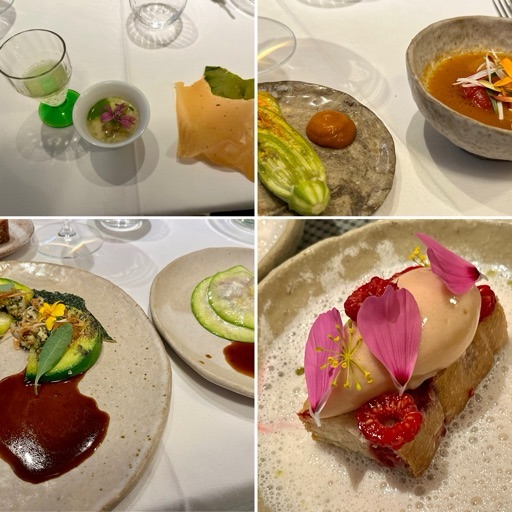
Kenn picked this tiny but very environmentally conscious restaurant. It is woman owned and operated, and the menu is very seasonal and plant forward.
Just one example: one of the wine pairings was from a small producer that makes organic mead champagne in the process of protecting a rare endangered bee species. She does not even use smoke with the bees.
We are Manon, Laurène, Céline, Lisa, Héloise, Juliette, Adèle, Charis, Jordan, Valentine, Frederikke, Louis, Louise and Manon.
We share a relentless passion for the good and the beautiful as well as a full-blown taste for happiness. Ours and yours.
Our producers are the unsung heroes of our team. Yet, we know their faces, their personalities, their boundaryless commitment. Because they tell us about the to meet them, you could listen to their voices in a remote corner of this place.
For us, a restaurant cannot function without sharing generosity and joy. We have created our project based on this very specific idea, whilst encompassing as much as we could the current human and environmental issues.
Welcome to Datil
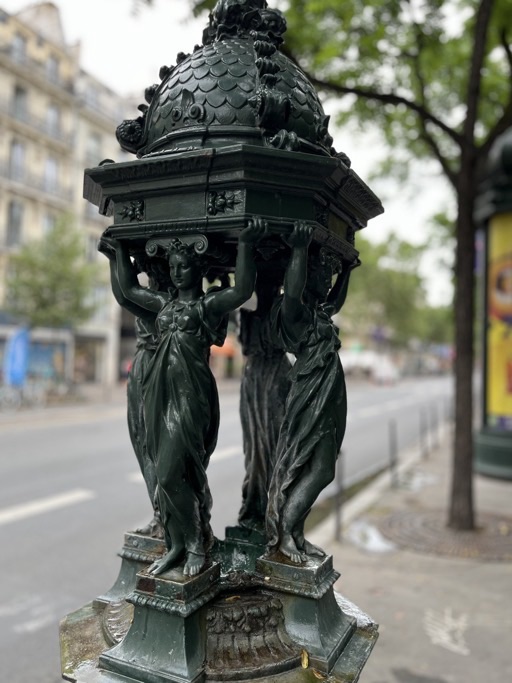
Just a small selection. Pieter took extensive pictures and wrote down notes of every course!The drinking fountains are all throughout Paris and have the clearest water.
Due to the cost, we originally decided not to get tickets to the opening ceremony.
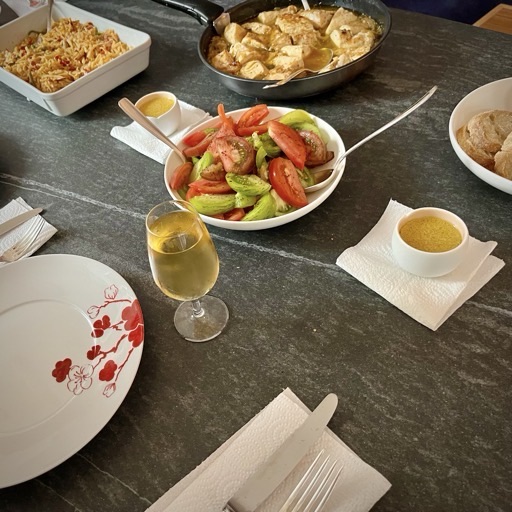
We opted for a home-cooked dinner of chicken piccata and watching it on TV.
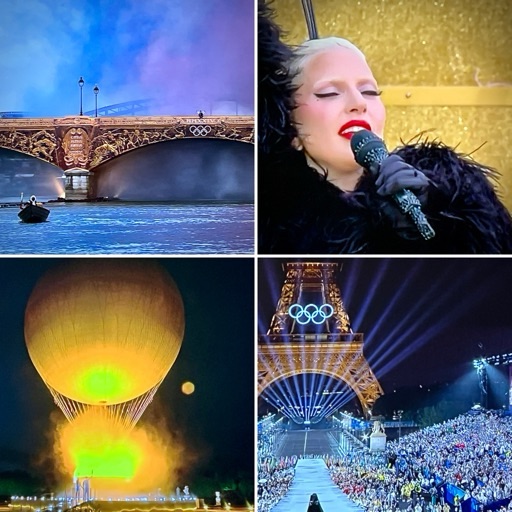
Since the opening took place on the Seine river, all the performances were spread out along the water and some even through the city. Having one expensive seat in the pouring rain would have shown you the boats coming by and none of the rest.
The show on TV was also a great experience. Four hours from start to finish, and not a single ad break. We saw every moment. (After a while we even started a game of which scenes will be cut out for ad breaks when shown in the US. )
Despite the continuing rain, we were all very excited to go see what this was all about.
And it was an experience. The crowd was energetic and the performers athletes were some of the best in the world.
Well worth it!
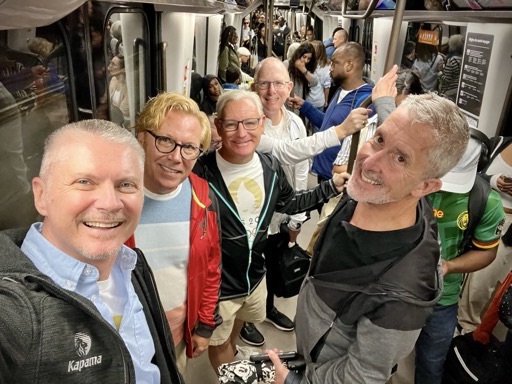
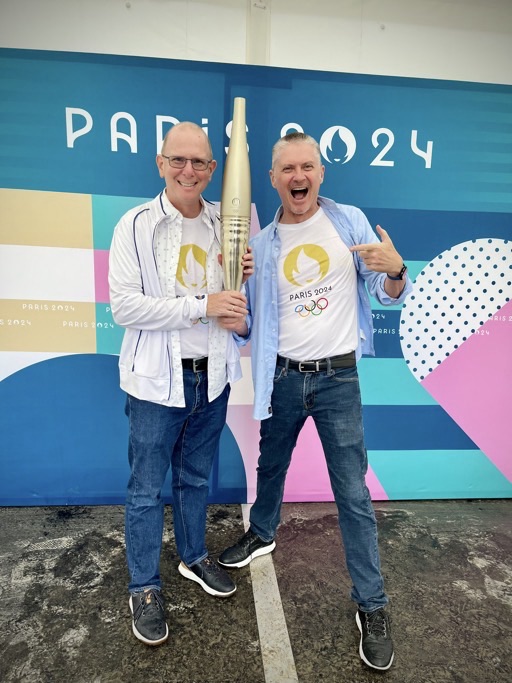
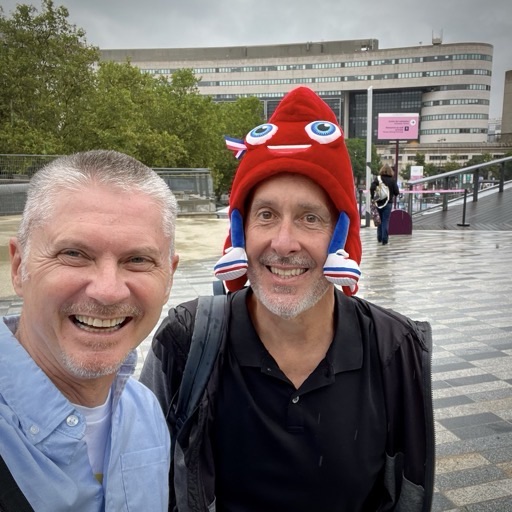
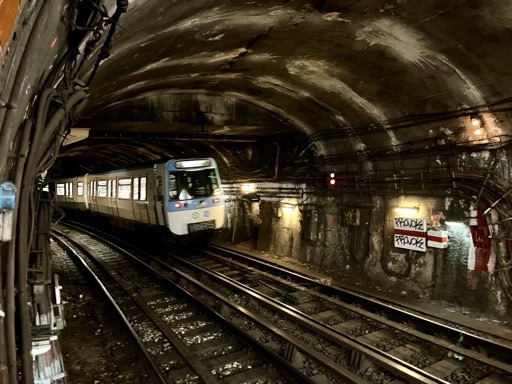
On the metro en route to our first Olympic event.Don’t tell Poody!Of course we wore the shirts for day one.Peter got a Phryghe! Now we can easily find him in crowds.
The Phrygian caps the Paris 2024 Olympic and Paralympic mascots are based on have been a symbol of freedom throughout French history. They are a common reference for French people, including in the world of art (as a metaphor for freedom) and as a symbol of the Republic in French institutions. Phrygian caps can be seen sat atop the head of the iconic figure Marianne in every town hall and even feature on everyday objects in France such as coins and stamps. They are also an international symbol of liberty worn by freed slaves in Roman times and appearing on different emblems in North and South America. Also known as the liberty cap, the Phrygian cap has become one of the symbols of the French Republic.
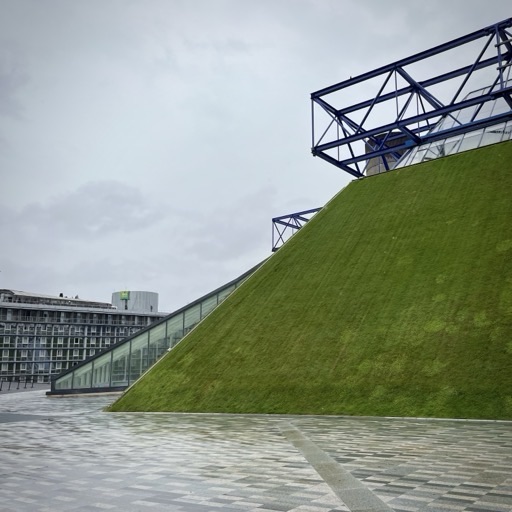
The motto of the Olympic Phryge and Paralympic Phryge is: “Alone we go faster, but together we go further,” representing the ways in which the mascots, and the people of the world, can make each other better by working side-by-side.The green roof of Bercy Arena.
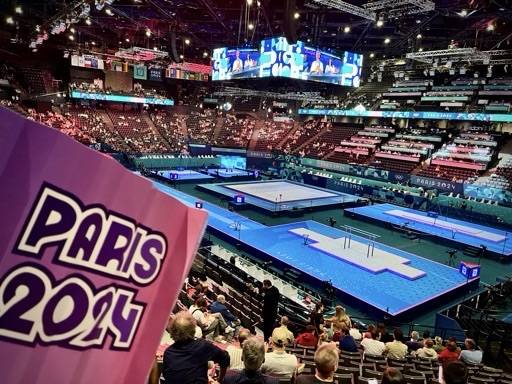
The Arena Bercy, with its iconic pyramid shape, has been a cultural and sporting jewel in the 12th arrondissement of Paris since 1984! This multi-purpose venue hosts prestigious sporting events, not to mention concerts by world-famous stars.
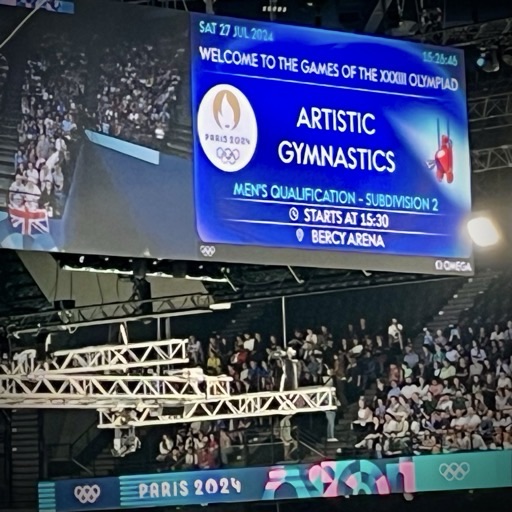
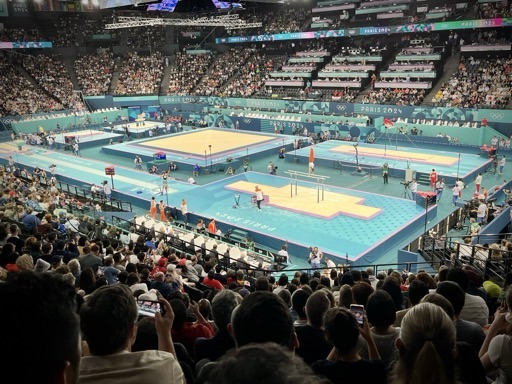
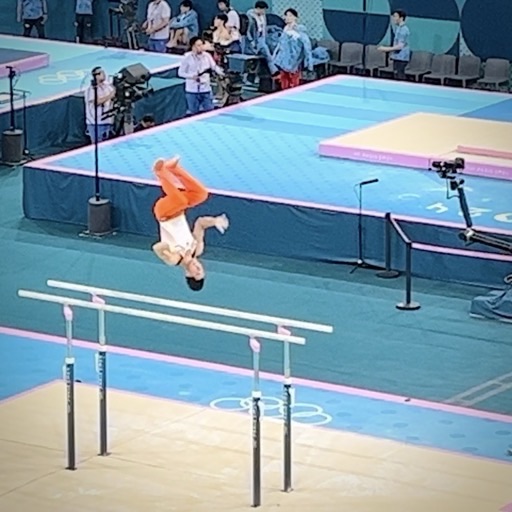
Renovated in 2014-2015, the Arena Bercy is now ultra-modern and ready for major events. More than 30 million spectators have already attended thousands of events, ranging from athletics to motocross and NBA matches. View from our seats.The artistic gymnastics program includes individual competitions on apparatus, as well as individual and team competitions on all apparatus.
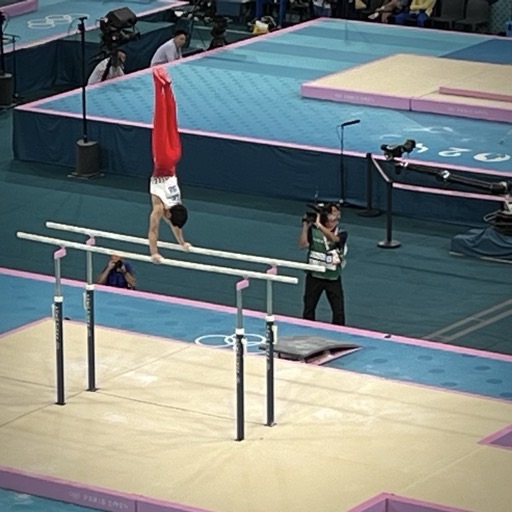
The apparatus consists of floor exercise, pommel horse, rings, vault, parallel bars and horizontal bar for men, and vault, uneven bars, beam and floor exercise for women.
In these various spectacular exercises, the figures and sequences require strength, agility, coordination and speed on the part of the athletes. An amazing two hours. Now we are back on the subway to head to Peter’s birthday party.
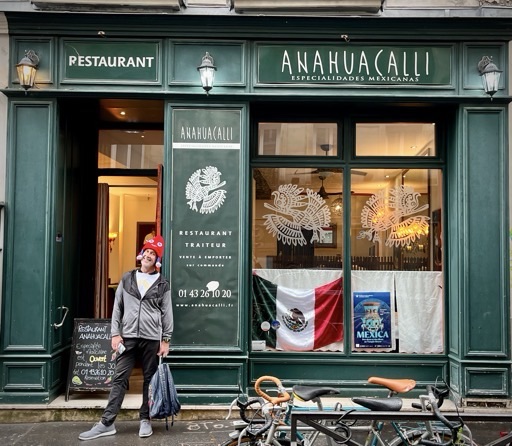
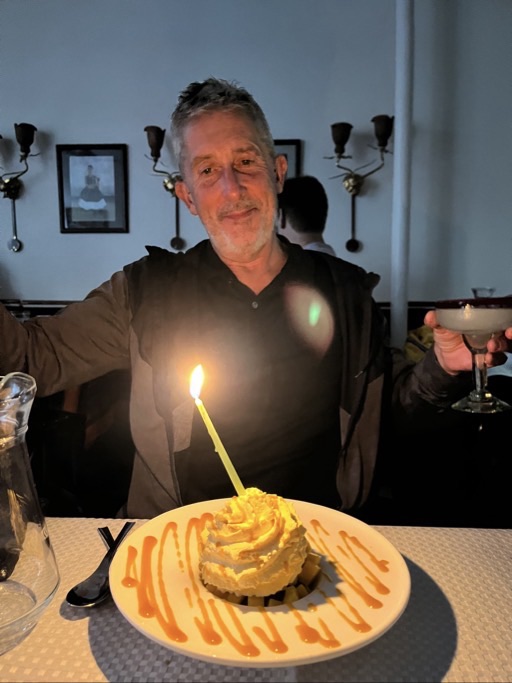
Since today is Peter’s birthday, he picked a spicy little place to go celebrate it over dinner.
If you have not already guessed, you can find the answer below.
The margaritas were flowing generously and he was very happy.
It was a great time had by all!
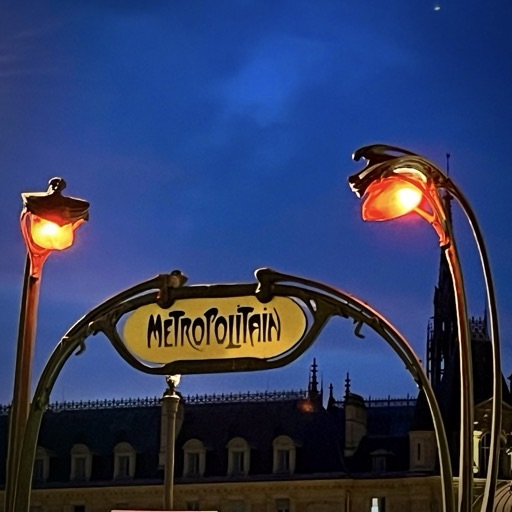
We stopped for ‘sneakies’ before dinner.The tiny and oh so delicious Mexican restaurant Peter picked to celebrate his birthday at.Happy birthday, Peter!The iconic red-eye glow from the Metro station’s entrance.
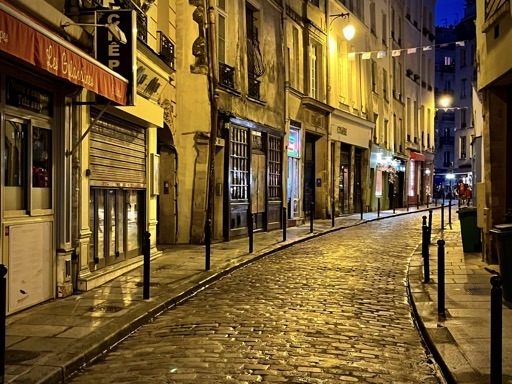
It was a beautiful Sunday morning, filled with sunshine. We decided to let the rest of the gang sleep and go for an early walk to explore the ‘hood’
Had lots of fun discoveries along the way.
The festival space around the Canal Saint-Martin.PARIS 24 LOS ANGELES
To celebrate Paris 2024 Games, and prepare for the flame handover to Los Angeles, 2028 host of Olympic and Paralympic Games, the City of Paris and Los Angeles County invited students from the Ecole Professionnelle Supérieure d’Arts Graphiques de Paris (EPSAA), ArtCenter College of Design, California Institute of the Arts (CalArts) and Otis College of Art and Design in Los Angeles to enter a competition. They have been asked to create a poster illustrating the Games and the friendship between the City of Paris and LA county.
This project is part of an entirely new form of cultural cooperation between the two Olympic cities, Paris and Los Angeles, in partnership with Los Angeles County and Seine-Saint-Denis region. Launched in 2024, the LA/ Paris collaboration will foster, between now and 2028, many cultural projects featuring artists from Paris and Los Angeles, among them this exhibition.
These 24 winning posters illustrate and celebrate the strong bond between the two cities, their cultural richness, and the values that bind them over the Atlantic. This exhibition will also be presented in Los Angeles this 2024 summer.Breakfast. The best espressos so far in Paris, followed by Prosecco. C’est la Vie!Food. Now.From 1942 to 1944, more than 700 Jewish children living in the 10th arrondissement were deported to the extermination camps. Among them, 75 toddlers were torn from their families and died without burial.
In order to honor their memory, a stele was dedicated to them in this garden. Access to the squares, among other places, had been forbidden to Jews by the Vichy authorities on the orders of the Nazi occupier.
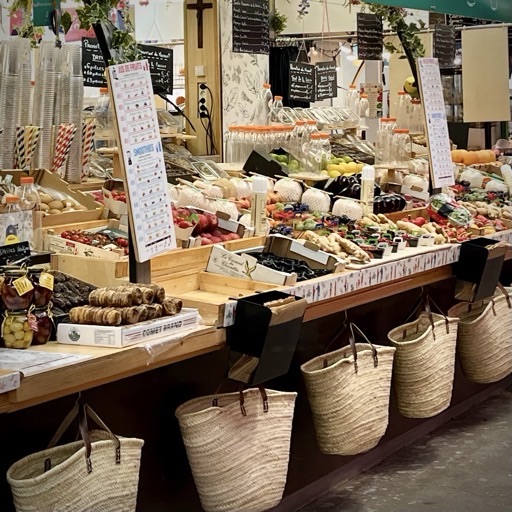
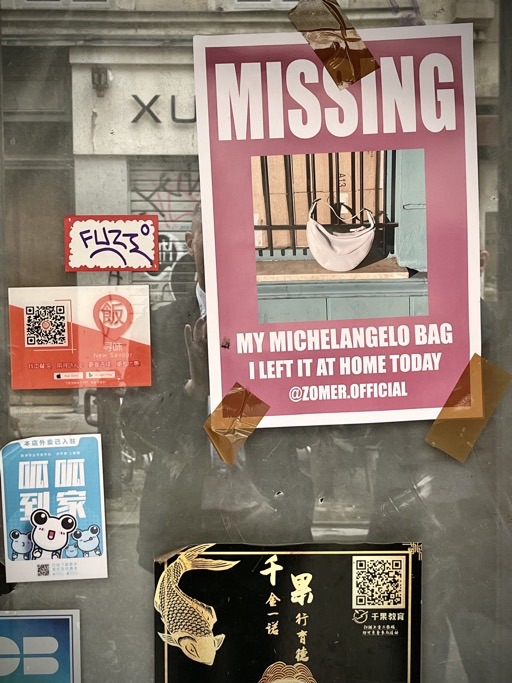
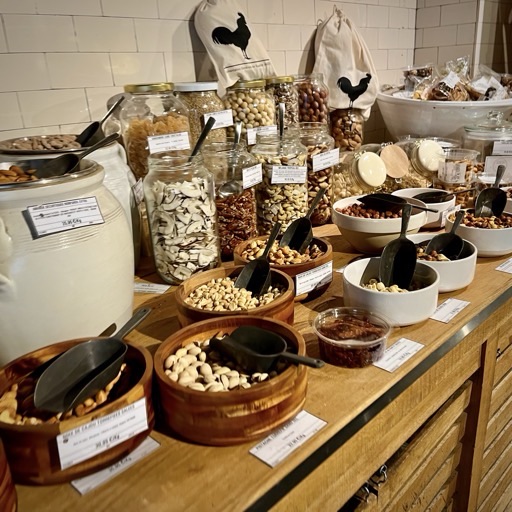
Let us never forget them.Missing Poody.Art for the Paralympics.We found a market a block from the apartment!Never had this cheese, so we got it.Wine by the keg!
Our event today is a football(soccer) game in the Parc des Princes. Japan vs. Brazil women.
The stadium was a little ways out, so we left early and had a nice lunch in the general area sitting outside.
It was a great game and very tense at times. Everybody played well.
Nearly 50,000 people all left at the same time, and we had a very very crowded Metro ride back. I definitely mean ‘very.’ Kudos to the organizers for crowd control since it was all very well done.
On the ride back Peter picked a sweet restaurant close to home.
Our charming server that was very excited when he found out we were going to see soccer.It was so yummy!They are always watching!Stopped for a quick espresso and opera cake on the way to the stadium.Parc des Princes The stadium is the third to have been built on the site, the first opening its doors in 1897.
Today we had no events, so we planned an all-day guided tour that included three famous castles in the Loire Valley.
After a long morning drive, mostly on freeway, we arrived at out first castle. Château de Chenonceau. It is a picturesque castle built to span the river Cher.
It is known as the ‘ladies castle’ since it passed from royal lady to royal lady. Usually very dramatically.
It was fun trying to explore the extensive property in the limited time we had.
In 1310, King Francis I incorporated it into the Crown Estate as part of a debt settlement. Later, King Henry II decided to offer it not to the Queen, but to his Favourite, Diane de Poitiers, “in full right of ownership, seisin and possession, completely, peacefully and perpetually, to dispose of as her own and true patrimony.” This artificial exit of Chenonceau from Crown Lands meant that it was saved, two centuries later, from the French Revolution.
On 10 July 1559, Queen Catherine de’ Medici, widow of Henry II, quickly deposed Diane de Poitiers and installed the authority of the young king, her son, at Chenonceau, amidst Italian pomp and splendour. Amongst the festivities she held here, she managed the Kingdom of France from her study, the Green Cabinet. Her daughter-in-law, Louise de Lorraine, wife of King Henry III, became a widow in turn, and moved into the château in her mourning.
In the 18th century, after the château was purchased by her husband, it was Louise Dupin, lady of the Enlightenment, who welcomed to Chenonceau the greatest scholars, philosophers and academicians in France to her famous literary salon. This exceptional woman was the first to draft a Code of Women’s Rights, with the assistance of her secretary, Jean-Jacques Rousseau, who enjoyed a period of serene happiness at Chenonceau that is described in a number of his works.
Finally, in the 19th century, the château was the stage for the success of Madame Pelouze, born Margaret Wilson, before a financial scandal led to her ruin… and the resignation of the fourth president of the French Republic, Jules Grévy, following the case of embezzlement by his son-in-law, Daniel Wilson, brother to Madame Pelouze. Henri Menier purchased the château from the Crédit Foncier in 1913. On his death, his brother Gaston, a progressive deputy and later senator, transformed Chenonceau into a military hospital for the duration of the Great War. He met all of the operating costs, as he did at Noisiel, headquarters of the Menier chocolate factory, where he set up a second hospital.
During the Second World War, the Grand Gallery at Chenonceau became the sole point of access to the free zone, and the Menier family helped to smuggle out people fleeing the Nazi tyranny. The US president, Harry Truman, visited the château on his first trip to France. First opened to visitors in 1913 by the owners, Chenonceau still hosts crowned heads, statesmen and leading personalities.
Finally off the freeway and in the countryside.The only light in Louise de Morraine’ all-black bedroom.The Queen’s ApothecaryThe wine cellar, where we found out we speak wine!
Amboise is a beautiful town on the banks of the Loire. It is a UNESCO world heritage site. Looming over the town is the very impressive Château d’Amboise.
According to legend, King Charles VIII went to invade Italy but instead fell in love with it and brought the art and culture back. It is considered the origin of the Renaissance in France.
You can see it in the castle where parts are more gothic, and later parts more Renaissance.
When we were in Milan last year (https://travel.monkeydads.com/2023-rhine/graffiti-in-the-dining-room/) looking at the last supper, the guide mentioned that Leonardo da Vinci was buried in a small town in France. Thinking that we might see it one day, little did we know that six months later we will be standing here.
Imagine a palace on a promontory above the Loire, and imagine the hanging gardens between heaven and earth … Amboise was one of the favorite sites of the kings of France when they transformed their country during the Renaissance period. Anne de Bretagne, François Ier or Léonard de Vinci (buried in the chapel of the castle), are familiar faces here.
A living castle open to nature, a haven of peace for more than 90 species of birds, Amboise also offers a 360 ° view of landscapes listed as World Heritage by UNESCO.
Visible as soon as you approach, the Saint Hubert chapel is one of the architectural jewels of the Château d’Amboise. Former private oratory of the kings of France which seems to be suspended above the city, it houses sumptuous decorations sculpted in the tufa, this soft stone typical of the Loire Valley allowing the finest work. Do not miss to look up at the remarkable stained glass windows of the building.
It is in this setting that you can discover the tomb of Leonardo da Vinci. As he had expressed his wish, the Italian genius rests in Amboise for eternity. The translation of the plaque is as follows: LEONARDO DA VINCI IN VINCI NEAR FLORENCE ON APRIL 15, 1452, SPENT THE LAST THREE YEARS OF HIS LIFE IN AMBOISE, AT THE CLOS LUCE MANOR AT THE INVITATION OF KING FRANCIS THE FIRST HE DIED THERE ON MAY 2, 1519 AND WAS BURIED AT HIS REQUEST IN THE CASTLE, IN THE COLLEGIATE CHURCH OF SAINT-FLORENTIN WHICH WAS DESTROYED IN 1807 HIS PRESUMED REMAINS FOUND DURING THE EXCAVATIONS CONDUCTED IN 1349 WERE TRANSFERRED TO THIS CHAPELOn 23rd April 1519, Leonardo dictated his last will and testament to the lawyer Guillaume Boureau, who noted, “The testator” wishes to be entombed in the St Florentin church, Amboise, and that his body be carried there by the chaplains thereof. On his death, 2nd May 1519, he was buried there. This fifth century collegiate was demolished between 1806 and 1810 (The bust of Leonardo da Vinci marks the spot in the château grounds).
Excavations were undertaken in 1349, led by Arsène Houssaye, inspector general of Fine Arts, and notably brought to light a skeleton close to a tombstone bearing fragments of the artist’s name and St. Luke’s, the patron saint of painters. The finds amassed, notably Italian and French coins from the start of François ler’s reign, enabled Arsène Houssaye to identify these remains as those of Leonardo da Vinci. These bones were finally transferred to the St. Hubert Chapel in 1874.François-Guillaume Ménageot The death of Leonardo da Vinci in the arms of Francis the FirstA gargoyle with a face under him. Delightfully odd.A selection of faces on the walls.Included in the tour was also a small wine tasting of some local wines.
Last castle after lunch is the very huge and architecturally very impressive Château de Chambord.
It sits on the largest natural park in France, and legend has it that Leonardo da Vinci was involved in the design. They know for a fact that he designed the double helix staircase that runs up the center of the castle.
Chambord castle is one of the Renaissance’s most amazing constructions. Built to glorify Francis I from 1519, it is above all a work of genius, the result of a collaboration between the best French and Italian artists, architects and master masons. More than just a residential or administrative castle, and even more than a hunting lodge, Chambord embodies an architectural utopia, an ideal, a harmonious whole.
Its history is unique: in the 16′ and 17h centuries, Francis I’s, Henri II and Louis XIV came to stay, along with their courts, to enjoy the hunting, to dazzle their guests or to monitor the progress of the construction work. In the 18th century, relatives of the crown were occasionally allowed to use it. It then became the private estate of Henri, Count of Chambord, who was the last descedant of the elder branch of the Bourbons. The castle was bought by the State a century later, in 1930.
All Chambord’s residents have been keen to preserve this jewel of the French Renaissance, in which Francis I’s aspirations and Leonardo da Vinci’s ideas are expressed in a variety of ways.
The inside shaft of the double helix staircase designed by Leonardo da Vinci.Along the walls, a 45-metre-long carpet has been rolled out displaying a 360° panorama of a landscape viewed from above. The floor surface has been covered with one hundred and twenty square metres of tiling, each with an oil painting: in this mirror image play, Julien des Monstiers recaptures the ornamental coffer motif on the ceilings of the cross-shaped hallways of the château. The blue and orange tones in the pattern form an integral part of the artist’s visual vocabulary.
Through the notion of reversal, viewers are given the opportunity to move within the painting, to experience it bodily. The collection of hunting buttons The ancestral tradition of riding to hounds uses a pack of hounds to track and hunt down an animal until it is at bay and can be taken. When Francis I came to the throne, this form of hunting was regarded as the most noble and over the following centuries the practise of it was increasingly codified.
Today it is part of France’s intangible cultural heritage. Apart from the act of hunting itself, riding to hounds also provided a magnificent display: the presentation of the pack, the horses and the hunters was an exactly ordered, elegant event. Its impressiveness was intended to highlight the prestige of an activity that had long been the preserve of the king and the nobility.
The costume to be worn by the hunters in particular became more standardized under Louis XIV. It comprised a heavy broadcloth riding coat or jacket with knee-length trousers, waistcoat, neck-tie, boots and stockings, gloves and riding hat. On top if this came accessories such as a riding horn, dagger, whip and so on. In order to differentiate the different hunts some parts of the costume were personalized, for instance the colour of the cloth or the pocket and collar trim, the braiding or the buttons on the jackets and waistcoats.
Following the Revolution, particular attention was lavished on the buttons which became items of skilled craftsmanship engraved with mottos or symbols referring to the species of animal hunted and all the accessories of the hunt. The top of the double helix staircase.View of the French gardens From the terraces, you can enjoy a prime view of Chambord’s French gardens which were restored in 2016-2017, the result of sixteen years of scientific research and an outstanding construction. They reproduce the exact layout of the lost 18th century gardens, of which some vestiges survived until 1970. Their grassy parterres, their flower beds planted with yew topiaries and flowers, their alleys, alignments and staggered tree plantings are governed by the same rules of symmetry and geometry as the castle itself.
Take the time to admire them from the terraces before going back down to the ground floor. From there, you can access the gardens’ platform and stroll through the alleys at your leisure. Our very informative guide, Will.
Recovery from the tour
The tiniest bug (about 1/8 of an inch) drinking water from my glass.It was a great day. Even found Superman.