Everyone knows that boating makes you hungry, right?
We headed to the historic city Utrecht and after a wander through the town, headed to the restaurant to have our first Indonesian Rijstafel.
Legend goes that when the Dutch East India Company started importing spices it was fairly unknown. Some chefs came over from Indonesia and started promoting the spices by presenting little sample tastes and plates.
This is a unique Dutch experience
If you think about it, this amazing dinner started as a company chef sales pitch!
The ‘Dom’Stopped for drinks at the Red Ruby.Dapur Cinta celebrates and presents a taste of Indonesia’s culinary origins inspired by the Archipelago’s indigenous tribes to a wider global audience with the most attractive tropical indigenous ingredients.Flint giving us good night kisses before bed. Such a charmer.
We went with Tijn to visit the town of Ravenstein while Dee went back to Schiphol to pick up the rest of the gang.
Arriving there, we expected to see a charming historic town with shops and cafes. We found a ghost town with not a soul in sight. It is Monday, and everything was closed.
After a short walk through the quiet and empty streets, we changed plans and headed off to the Brabant woods.
Finally found something warm to drink: the most unusual ‘tea’. Mine was some ginger pieces in hot water, and Kenn’s was a mint branch in hot water. This will be our new way of drinking it from now on!
Ginger Tea. Here it means a piece of ginger in hot water. Nothing else.
All aboard!A replica of the inside of an Indian kitchen.If these moved they would have been even creepier! They were very well done though. Time for a little refreshment.Even though the direct translation of ‘Korenwolf’ is ‘corn wolf’, it really means ‘hamster’The blacksmith was a real person demonstrating his craft.
Our excursion today on the way back to Amsterdam was the De Haar Castle. This is the largest castle in the Netherlands with a long and later surprising modern history involving the Rothchilds.
Leaving this very pretty house. Hope to see you again one day!You are at the Stable Square (“Stalplein” in Dutch), since 1900 the place for the horses, carriages, automobiles and the servants’ quarters of the Van Zuylen van Nijevelt family. The Stalplein was a coming and going of the family and their guests every September; it was the place where the family’s passion for travel and mobility came together. Baron Etienne, for instance, was a great lover of racehorses and unique carriages and was an advocate of the automobile.
Baroness Hélène de Rothschild was one of the first women with a drivers license and participated in the first international car rally, between Paris and Amsterdam in 1898. Some of the locals?The impressive central or Main Hall is the former courtyard of De Haar Castle, and was roofed in during the restorations (1121-1912). The wooden vaulted ceiling, 18 metres high, is richly decorated with gold leaf. Large country estates were also fitted out with halls around 1900, but an interior such as this is utterly unique in the Netherlands: half Gothic cathedral, half luxury hotel lobby. Every aspect of the hall revolves around both the glory of the Van Zuylen name and the comfort of the guests.The angel of coffee?The hall’s oak ceiling, which was manufactured in Cuypers’ own studios, hides a construction that was modern for its time. The supports are iron trusses and purlins, forged in Marchienne (Belgium). These supports were covered with an external layer of reinforced concrete, which had been invented in around 1850 by Frenchman Joseph Monier and even supplied by the Amsterdam Cement and Ironworks (Amsterdamsche Fabriek van Cementijzerwerken). Slate roofing was added on top of the concrete, and in June 1897 the roof was fully panelled and finished.Angels in the architecture.The beauty parlor.
Negroni’s on the canal on a stunning summer’s afternoon.Hotel bar.How much is that doggie in the window?What’s new, pussycat?One of many canals and many selfies!One of many walking back!Words to live by.
The hotel breakfast was quite the little feast and even included some unusual (for us) things like chia pudding.
We had some time so took an early morning stroll through the city then made our way to the station.
The Eurostar was such a nice experience. They even apologized repeatedly and profusely for being 15 minutes late.
Some kind of pistachio cake-ish thing. Ah… European breakfasts.We passed on the cookie. Too much for breakfast!Praise cheeses!Second breakfast was only about an hour after our morning feast because Kenn insisted on his ‘dam tradition of getting these fries.Centraal StationOur first lounge on a station. Bougie.Lunch service in the train.Eurostar is a sponsor of the Olympic Games.
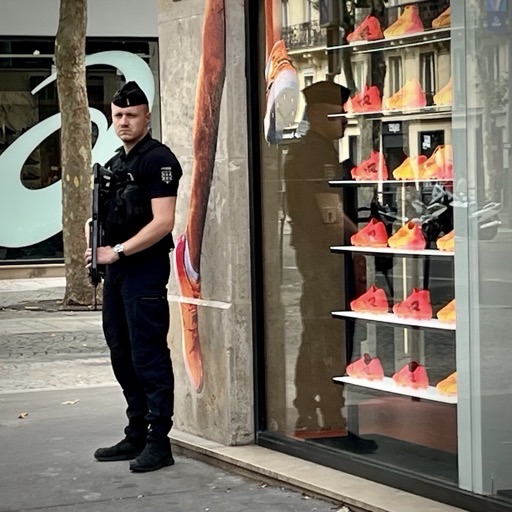
Gare du Nord was not only very busy when we arrived, but the amount of armed security everywhere was insane.
It was a short, and very packed, metro ride down to our new home for the rest of the week. A charming place behind a very intimidating facade.
We settled in and them went shopping for the first ‘home-cooked’ meal in Paris.
Pieter walked into the station with some of the Dutch Olympic team!Over time we have learned that city doors to apartments should never look inviting.This is what lays behind that door.On the stairs going up.The perfect ‘coaster’ for wine while enjoying the view.‘Pasta a la Gavin & Kenn’ coming up!
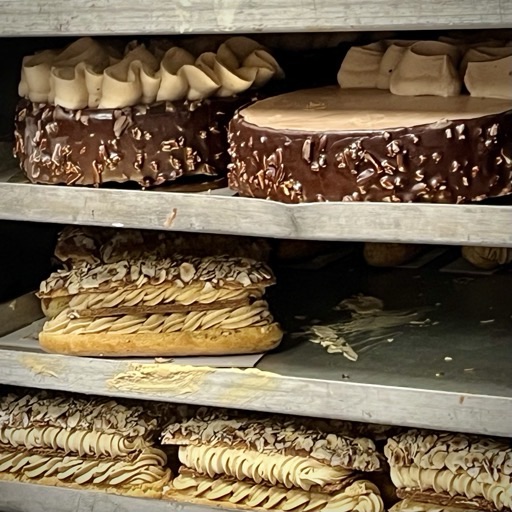
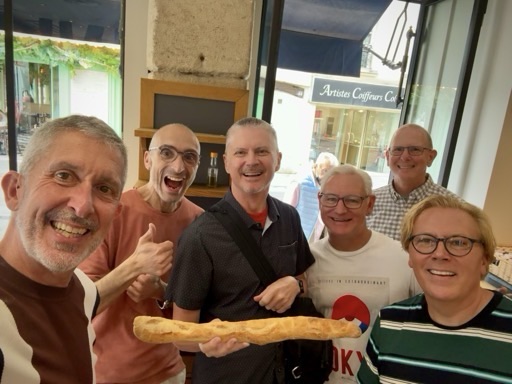
Since the games have not officially started yet, our morning excursion was an ‘interactive bakery experience’
We not only made by hand breads and baguettes as well as pastries, we also learned a lot of interesting and sometimes surprising facts.
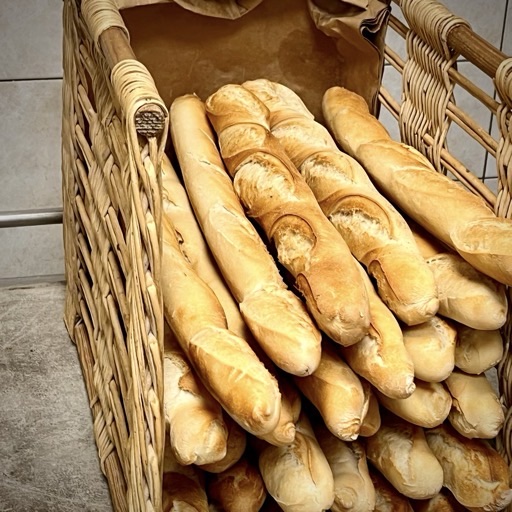
Random facts like: all the bakeries’ profits are from sandwiches and pastries. It takes four days to make a baguette, and they sell them for around one euro each. (This specific bakery makes about 1,000 baguettes every day by hand.)
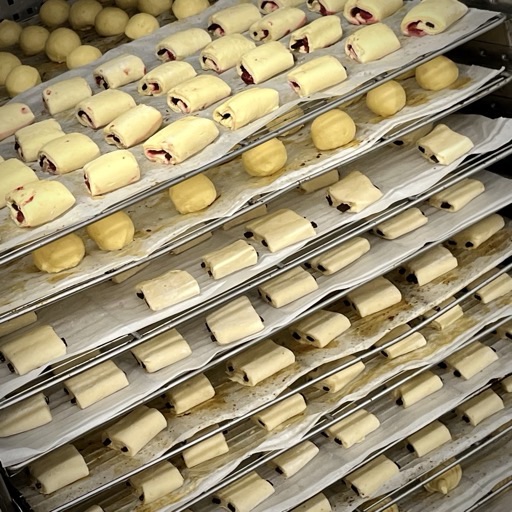
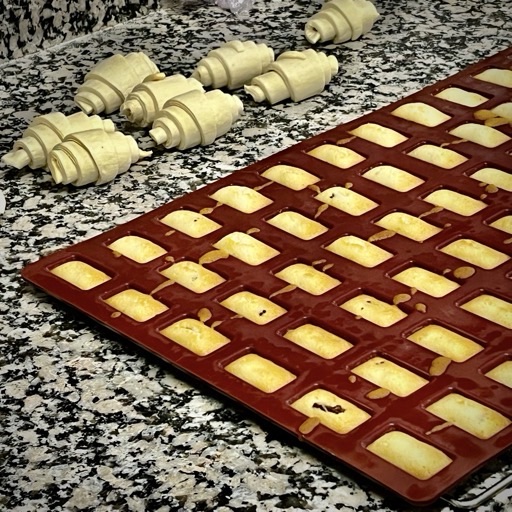
More fun facts about croissants. Did you know that a curved croissanteans it is made with margarine, and a straight one with butter? During war times there was no butter available so they used margarine. To identify that to the very discerning consumers, the bakers started curving the ends in like a ‘C’ shape.
We all enjoyed it very much and took enough bread home to last for all the days we are here.
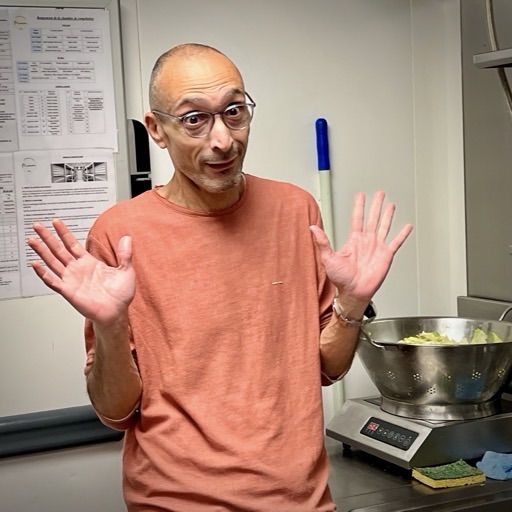
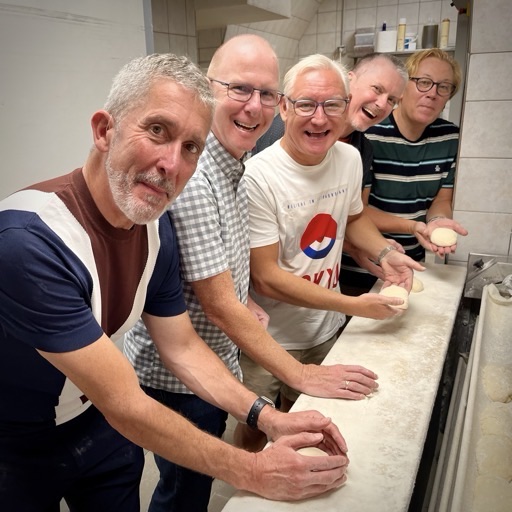
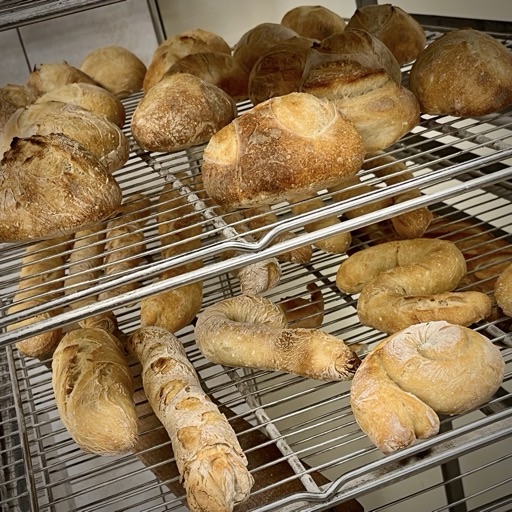
Our ‘school’ for the morning.Are we going to make these?Our very personable tour guide.Making ‘boule’
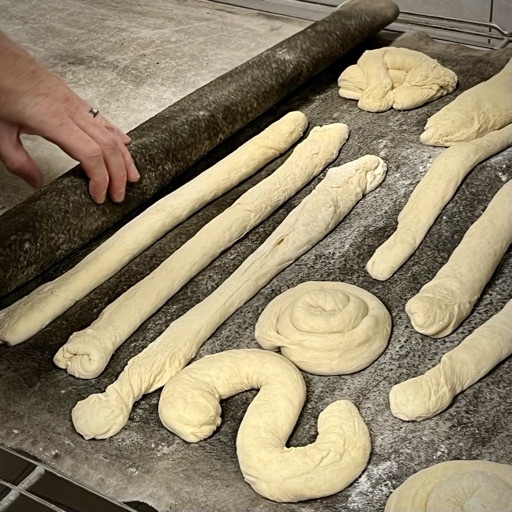
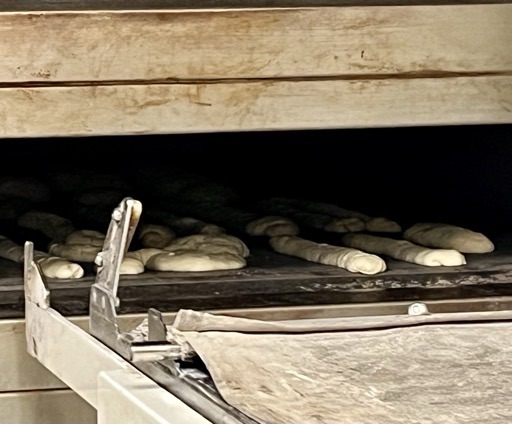
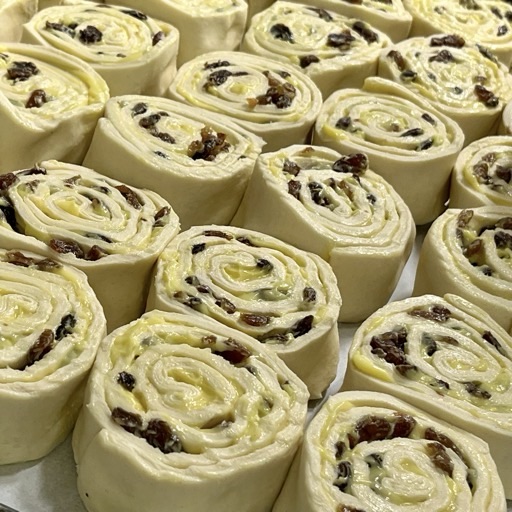
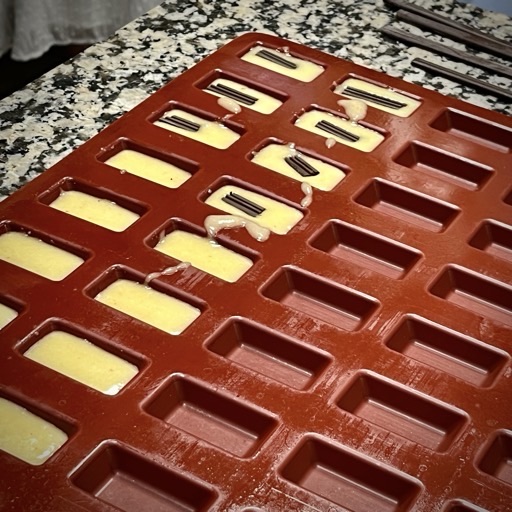
Pain boule means “ball of bread”. The shape of the bread is similar to an upside-down bowl, and the word boule literally translates to “ball” in French. Our ‘baguettes’. We had fun with shapes.In the oven they go!Pain aux raisins, also called escargot or pain russe, is a spiral pastry often eaten for breakfast in France. Its names translate as “raisin bread”, “snail” and “Russian bread” respectively. It is a member of the pâtisserie viennoise family of baked foods.Pastries!We are making financiers.
The name financier is said to derive from the traditional rectangular mold, which resembles a bar of gold. Another theory says that the cake became popular in the financial district of Paris surrounding the Paris stock exchange. The financiers are done! In the back you can also see the butter croissants we rolled.Our breads are done too!Not ours, of course. The professionals made these.
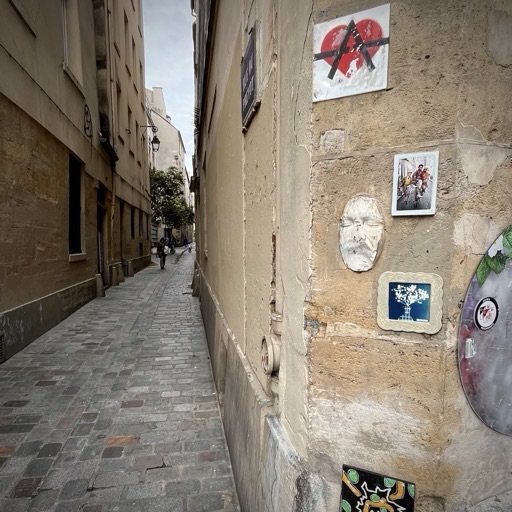
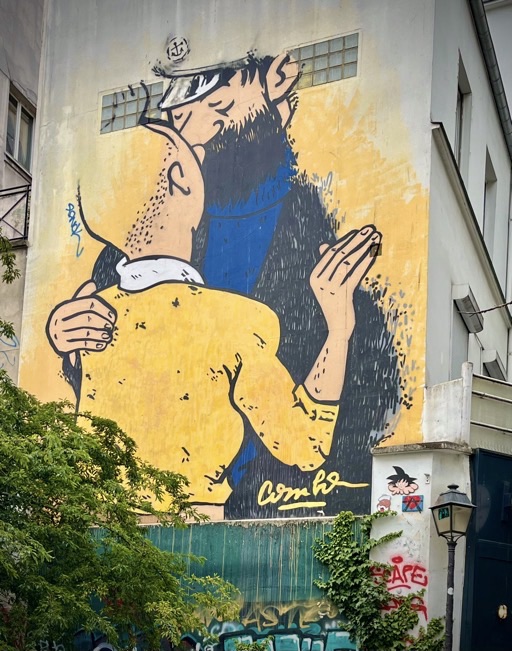
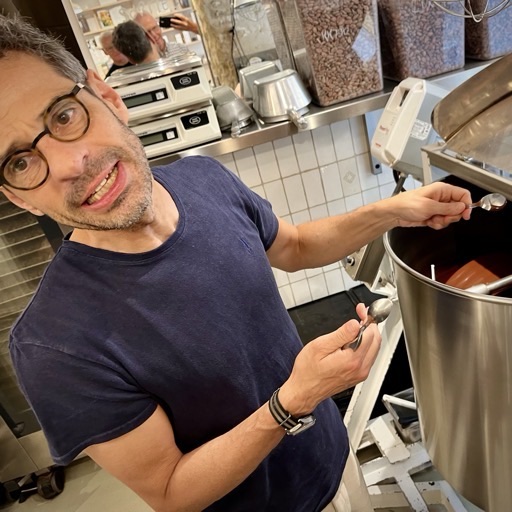
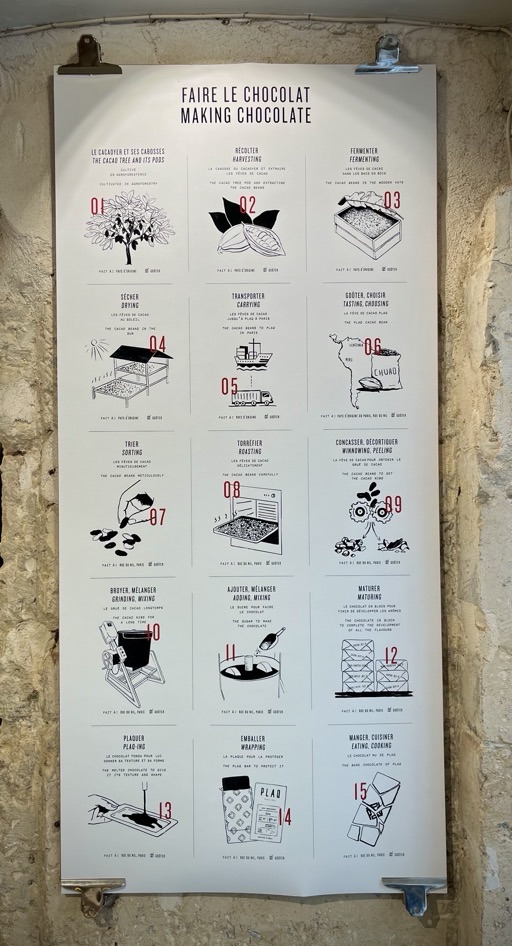
After the bakery experience we walked around Le Marais district in Paris, had some lunch, walked some more, learned about making (and mostly just tasting) artisanal chocolate and then attended a soirée we were invited to.
What a great day!
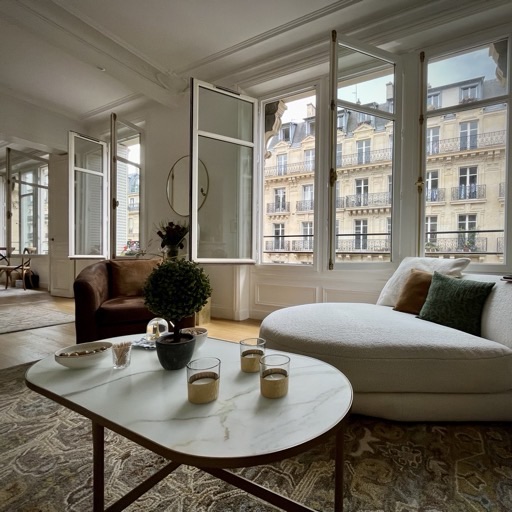
There are heavily armed police nearly everywhere.Our random lunch stop.Learning about making artisanal chocolate. And tasting, of course!The soirée we are attending is in this stunning apartment.Good night, Paris!