Foodie Fun

For his birthday today Gavin had a full day planned, which involved a lot of eating. A lot!

First in the agenda was a food tour where we were to ‘taste’ food from each of the three major cultures in Singapore.

We did not expect ‘taste’ to mean eating a full on meal of mutliple dishes every 90 minutes.

The tour started in the Malay section where we had the traditional tea and two versions of breakfast.

A short walking tour through the area lead to a subway ride to the Indian section.

Here we had four different Indian courses in the Tekka Hawkers Market.

Next stop was the famous Michelin starred hawker stall in China Town. They did arrange our meal ahead of time, since the line to get food from it was about a 45 minute wait in line.

By now we were stuffed, and it was not even lunch time yet.

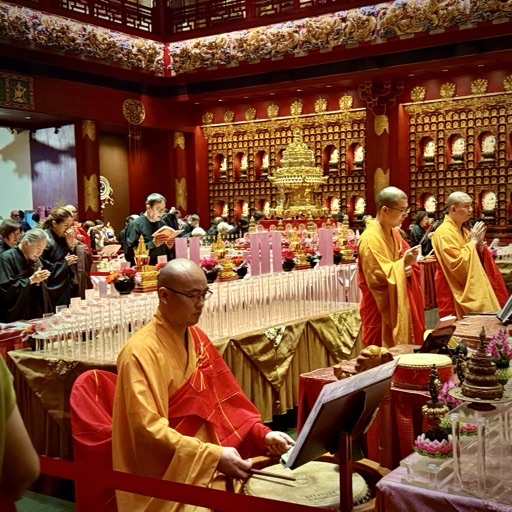
The tour ended in front of the Buddhist Temple and our guide highly recommended a tour of the museum upstairs, as well as seeing the Buddha’s Tooth Relic.

One can probably figure it out from the name that the drink ‘Singapore Sling’ was invented here in Singapore. We headed off to the Long Bar in the Raffles Hotel that claimed they invented it.

It was such a good idea, that every other tourist in town also had the same plan. Standing in a long line in this heat for a drink suddenly lost its appeal.

Dinner was at a highly recommended restaurant where the chef took his family’s handed-down recipes and fused them wiith his formal European training to create some unique dishes.

And they were.

It was a great day of friends celebrating with a lot of eating.

Mural in the Malay section

Masjid Sultan

Masjid Sultan, also known as Sultan Mosque, is an important focal point for Muslims in Singapore and the most prominent landmark in Kampong Glam. Every year, during the fasting month of Ramadan, Muslims gather in the vicinity of the mosque to await the prayer call to break their fast.

Though the current building was constructed in the late 1920s, Masjid Sultan has a history that goes back to the early part of the 19th century.

In 1819, Sir Stamford Raffles (1781-1826) signed a treaty with Sultan Hussein (1776-1835) and Temenggong Abdul Rahman (d. 1825) allowing the British East India Company (EIC) to establish a trading post in Singapore.

In 1823, the Sultan wanted a mosque near his residence at Kampong Glam. Raffles made provision for the mosque to be built near the istana and allocated funds towards the construction.

The mosque, a brick structure with a three-tier tiled roof, was constructed between 1824 and 1826, and served the community for a century.

In 1879, Sultan Alauddin Alam Shah (d. 1891), also known as Tunku Alam, who was Sultan Hussein’s grandson, and a Tunku Aleema gave more land to the mosque.

By the early 1900s, the mosque had become inadequate for the Muslim population. In January 1924, it was decided that the mosque would be demolished and rebuilt. The present building, commissioned in 1924, was designed by Irish architect Denis Santry of Swan and MacLaren in the Indo-Saracenic style, with distinctive domes and minarets.

The mosque was built in phases over a few years so that funds could be raised, and devotees could continue performing their prayers in the mosque.

The cost of the rebuilding was funded with donations from the Muslim community. In addition to monetary contributions, the community also donated glass bottles which were incorporated into the base of the dome.

When war broke out in Malaya in 1941, people of different ethnicities and creeds sought shelter at the mosque and one of its minarets served as an observation post to look out for enemy aircraft.

Masjid Sultan was gazetted as a national monument in 1975. The annex building, designed in a similar style to the mosque, was officially opened in 1993.

Our tour guide ‘William’

Atlas Bar

Tekka Market

Tekka Market, also known as Kandang Kerbau Market, was built in 1915 and became a well-known marketplace for fresh cut meat. The name, Kandang Kerbau, made reference to the surrounding cattle trade and means “buffalo enclosure” in Malay. The Chinese called it tek kah because of the wild bamboo found in the area. The original market was located across Serangoon Road, opposite the present site. Tekka Market was popular amongst all communities and known as the “people’s market”. It gained a reputation for its varied and reasonably priced fresh vegetables, meat and seafood.

During the redevelopment of the Serangoon area in the early 1980s, the market was demolished and most stallholders were relocated to the present site, which was renamed as Zhujiao Market, a Chinese transliteration of “Tekka”. In 2000, the market was renamed Tekka Centre to better reflect the history of the place after public feedback that Zhujiao bore little resemblance to its former name.

The famous Michelin starred hawker market chicken.


“Remembering Our Past, Celebrating Our Future!”
By : Zhenghua Primary School

Our pioneer, the Samsui women, went through much toil and sweat in the building industry. These buildings, still a part of Singapore’s History, have withstood the test of times and bear witness to their resilience and efforts. To acknowledge the tremendous sacrifices of our Samsui women, students at Zhenghua Primary put together these artworks in memory of them. It is their way of paying tribute to the Samsui women for their immense contributions towards our nation building. It is a privilege for the students to embark on this meaningful journey of placing history onto canvas in their honour.

Our shorts did not cover our knees!

The Buddhas of the World Museum serves as a one-stop portal for visitors worldwide to appreciate the life story of Buddha Shakyamuni, to understand the meaning of His key teachings (Dharn as well as to introduce the future Buddha, Maitreya, through the artworks and artefacts.

Vairocana Buddha Prayer Wheel

The Vairocana Buddha Prayer Wheel is installed inside Ten Thousand Buddhas Pavilion.

It is the largest cloisonné Buddha Prayer Wheel in the world. “Revolving scriptures” originated from “turning the pitaka”. “Turning” a Sutra is different from “reading pitaka” which virtually meant reading the Sutras everyday without missing a single word. “Turning pitaka” is just reading a few lines at the start, middle and end portions of the Sutras.

Cylindrical in shape, it is a religious artefact commonly used by Chinese Buddhists. The rim is embossed with esoteric Vairocana Mantra. A piece of scripture is placed inside. Every turn of the wheel represents a single recital of the scripture and mantra. The wheel is a convenient way to recite the sutra.

Raffles Hotel

Visitors to Raffles Hotel Singapore were a cosmopolitan lot, with many being energetic globe-trotters. In the early 1900s, when rail and road travel improved, palm oil plantation owners from Malaya would retreat to Singapore during the weekends, initiating a ritual known fondly as “Planter’s Weekend”.

Travellers also included the well-heeled on round-the-world cruises, such as European adventurers of various colonies, French Indochina and Hong Kong as well as various merchants on their way to China and Japan.

People will tell you that the best Eurasian food in Singapore is found not in Singapore but in homes, cooked from recipes handed down through the generations.

Here at Quentin’s, we introduce the Eurasian past and future cuisine, passed down from generations and to carry the tradition and introduction of new creations to future generations!

“Skinny Chef” Quentin learned the art of Eurasian Cooking from his Grandparents.  He has taken the bold step of setting up a Eurasian Restaurant knowing full that Eurasian Family cooks will be his harshest critics.

Foodie Fun Read More »

Lions and tigers oh my

We started the morning with a cable car ride. Our tickets included both cable car lines, as well as a trip on the new glass-bottom capsule.

With the first stop being Mount Faber, we all schlepped up the hill in not-very-delightful heat and humidity because Pieter saw that there is a Merlion on top at Faber Point.

It was well worth it since the views were stunning from up there.

The ride on the rest of the cable lines was very enjoyable and seeing first Singapore and then Sentosa Island from the top was well worth it.

Back to Hopscotch we went since the rest of the gang wanted to have the cocktail experience as well.

For the evening the whole group went off to Clark Quay for dinner and then a city lights cruise on a ‘bumboat’

Not only were the lights and views breathtaking, we were also in time to see the real Merlion as well as a water and light show at Gardens on the Bay. The scale of the show was unimaginable.

A brilliant ending to a great time in Singapore.

Singapore Cable Car

The hot and humid walk to the top

Stunning views from the top.

Found a Merlion!

The Lion City

According to Malay legends, Sang Nila Utama was the founderof Singapura. 

While hunting wild animals on the island he came upon a strange animal resembling a lion and therefore decided to name the island “Singa” (meaning lion) and “pura” (meaning city)

The rest of the history murals

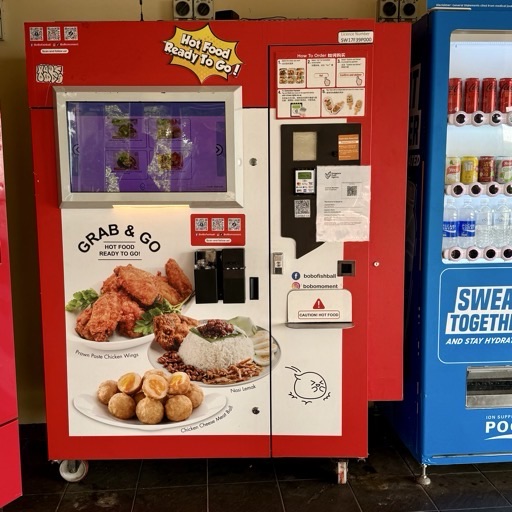
A vending machine with hot food ready to go.

This time we are in the new glass bottom capsule.

The down view

Our next cruise in 2026 will be on Viking

Views from the Sentosa Island cable cars

Not a sign we see in Orlando

Our first Singapore Slings, in a Merlion!

Eight Treasures Negroni

Drawn from ancient Chinese immortality elixirs, this cocktail is served in a Royal Chinese goblet paired with preserved bayberries, and osmanthus jelly, delightful treats once enjoyed by royalty. With a twist on the classic Negroni, it incorporates eight treasure ratafia, which adds a unique oriental flavour.

Bennie looks very unsure about the hat.

Bumboats

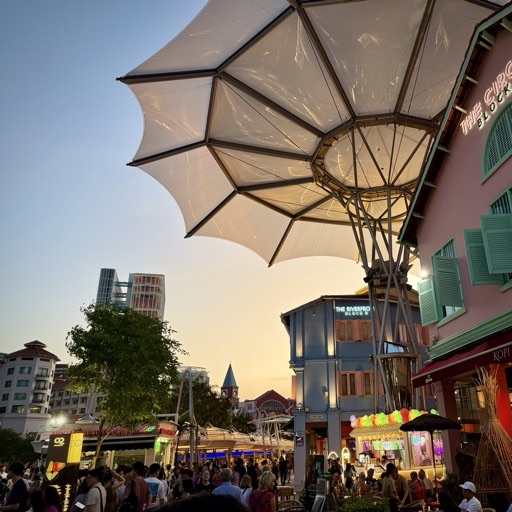
Clark Quay at sunset

Starting our river cruise

Merlion guarding the mouth of the river into the city.

We were in time for the water and light show

View looking up

Bumboat

Last trip on the subway with my otter-ly cute SMRT card.

Lions and tigers oh my Read More »

All aboard!

Out last day in Singapore.

For our last meal here Pieter wanted ‘carrot cake’. Incidentally, it was also the first meal we had in Singapore.

We went to the same hawker stall and it was still delicious.

After packing we had a few minutes before leaving so we took an early Sunday morning stroll through China Town. A very different experience that early on a Sunday.

Check-in was a quick and easy and after a light lunch we unpacked and took our spots at the front if the ship to watch the departure.

Our timing was a bit off since ‘Ship Time’ was not the same as actual time, and the ship ended up departing during our dinner.

Last breakfast in Singapore had to be ‘Carrot Cake’

Carrot cake, also known as ‘chai tow kway’, refers to a glutinous rice flour “cake” that’s made from a white radish cut into cubes, wok or pan fried till crispy, then cooked into an egg omelette.

The bits of radish cake taste mild and have a soft, pleasant texture. Common ingredients mixed into the omelette include fish sauce, preserved vegetables, garlic, and green onion. Dab on some chile sauce if you want it hot. There are two kinds that you can get: white or black. The black version is mixed with a dark sweet soy sauce.

We had a few minutes before we had to leave so we took a stroll through China Town.

View of Singapore from the ship

Cruising

All aboard! Read More »

Merrily we cruise along

Our first ‘sea day’ and we spent time exploring the ship and relaxing.

There was also an onboard lecture about the two Thailand locations we were going to.

After lunch we had a shirt nap and got ready for the dinner we were both looking forward to the most.

Morning coffee on the veranda

The ‘Persian Garden’

You can do glass blowing on a ship.

Meeting the lecturer, Suzanne

Captain Theo

Merrily we cruise along Read More »

Oh My God Omakase!

The dinner we have been looking forward to the most is finally here: Omakase.

Besides the welcome drink and the edamame to start, this Japanese tasting menu consisted of a ten-course experience created by Master Sushi Chef Yoshikazu Okada.

Every tiny morsel was a sensory blast.

And, best of all, we had real wasabi for the first time ever. It is such a complex and slightly sweet taste. We might never be able to eat the green dyed horseradish they call wasabi at home.

The word ‘stuffed’ does not even come close to how we felt afterwards.

It was so worth it.

The welcome drink

The view from tonight’s restaurant

Classic Japanese

AJITSUKE MAYAK EGG ON A NEST
Golden Osetra Caviar
Bottarga Golden Ingot

DAIKON & CUCUMBER SALAD
Crisp Pork Belly
Edamame & Roasted Jalapeño Purée
Furikake

HAMACHI CRUDO
Oranges
Ponzu
Ikura

CHAWANMUSHI
Lobster Salad
Sticky Dashi
Golden Osetra Caviar

HOKKAIDO SCALLOPS NIGIRI
Fresh Wasabi
Lemon
Green Olive Truffle Tapenade

AKAMI NIGIRI
Romesco Sauce

YELLOW TAIL NIGIRI
Yuzu Gel
Jalapeño
Fresh Wasabi

SALMON BELLY NIGIRI
Fresh Wasabi
Ginger
Ikura

GINDARA SAIKYO YAKI
Black Codfish
White Miso
Red Miso

DORAYAKI
Anko
Matcha Ice Cream

The awesome chef

Oh My God Omakase! Read More »

Heffalumps galore

Our first stop on the cruise was at Ko Samui.

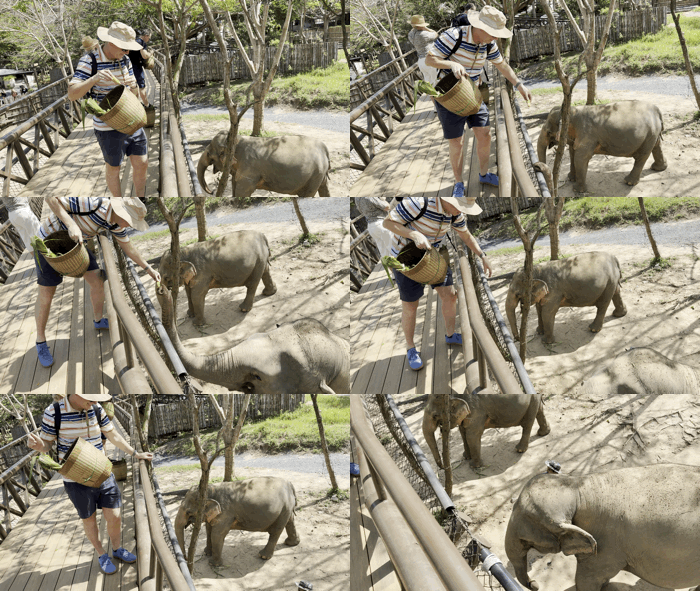
We had a feeling we’ll be seeing a lot of temples on this trip, so for our first stop opted for the tour to the elephant sanctuary instead.

What a delightful experience!

It is locally owned and operated, and is a completely ethical sanctuary. No riding or making the animals do tricks.

We learned about the history of elephants in Thailand and also of the sanctuary itself.

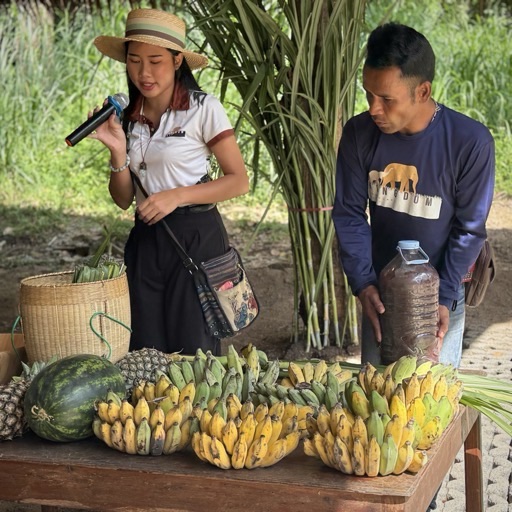
Then we learned about their diet and food after which we were each given a basket of food.

On the elevated walkway we heard about the history and personality of the elephants, and then we got to feed them.

Such a great experience.

http://WWW.ELEPHANTKINGDOMSANCTUARY.COM

Our excursion ended after lunch and we headed back to the mostly deserted ship.

Good morning Ko Samui!

First priority: breakfast!

Our tender was a life raft.

Our very informative guide Panda

First we learned about the history of elephants in Thailand and the sanctuary.

Napier Grass or Elephant grass

Elephant grass produces very few seeds and is mostly propagated vegetatively through stem cuttings consisting of at least 3 nodes, 2 of which are buried in rows.

Row width ranges from 50 to 200 cm and distance within rows is retween 50 and 100 cm. After planting, elephant grass grows strong and can reach 4 m in 3 months.

Elephant grass is fast growing and has a high annual productivity but depends on the climatic conditions, especially temperature rainfall.

Elephant grass,that lives for many years. It is a native plant of countries in tropical and subtropical Africa. Imported into Thailand since 1929.

Feed me!

Grandma only wants bananas since she has only one tooth left.

The baby

Shrines everywhere

The modern jungle

Back on the ferry

Rub a dub dub, two dorks and the tub

The ship is so empty

… and we’re off!

Heffalumps galore Read More »

WAT’s up?

After a roughly 2 hour bus ride from the port, we arrived in the city of Bangkok, now colloquially known as Krungthep.

The full name of the city is in the longest in the world and is: Krungthepmahanakhon Amonrattanakosin Mahintharayutthaya Mahadilokphop Noppharatratchathaniburirom Udomratchaniwetmahasathan Amonphimanawatansathit Sakkathattiyawitsanukamprasit which rougly translates to “City of angels, great city of immortals, magnificent city of the nine gems, seat of the king, city of royal palaces, home of gods incarnate, erected by Vishvakarman at Indra’s behest.”

Our first stop was the Grand Palace complex which also included the Wat Phra Kaew, Temple of the Emerald Buddha. Not a real emerald, but a solid piece of jade.

What an astounding complex. All the previous kings (known as Ramas) each have a pagoda here.

A lot of royal history all around.

Next stop was Wat Pho with the giant Reclining Buddha.

Our last temple for today was Wat Traimit, the temple of the Golden Buddha. A massive block of solid gold.

After a long, hot day we checked into our hotel with a river view from our room. Now for much needed showers.

Pan, our tour guide

No shorts in the temples, so we all got ‘elephant pants’

Every king’s ashes are in a pagoda colored with the color of the weekday he was born.

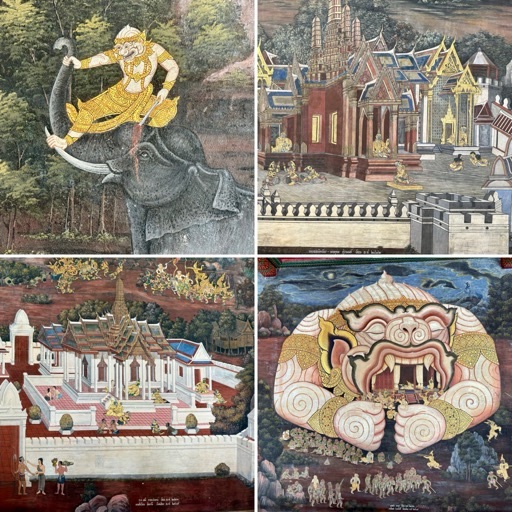
Details of the Ramayana

The Ramayana is a Sanskrit epic from ancient India.

The epic narrates the life of Rama, the seventh avatar of the Hindu deity Vishnu, who is a prince of Ayodhya in the kingdom of Kosala. The epic follows his fourteen-year exile to the forest urged by his father King Dasharatha, on the request of Rama’s stepmother Kaikeyi; his travels across the forests in the Indian subcontinent with his wife Sita and brother Lakshmana; the kidnapping of Sita by Ravana, the king of Lanka, that resulted in bloodbath; and Rama’s eventual return to Ayodhya along with Sita to be crowned as a king amidst jubilation and celebration.

Ap Sara Si

You tell the difference between giants and monkeys by their feet.

Every inlaid and all paint is meticulously hand done.

Wat Phra Kaew (Temple of the Emerald Buddha)

The Emerald Buddha is a solid block of green jade.

Wat Phra Kaew, commonly known in English as the Temple of the Emerald Buddha and officially as Wat Phra Si Rattana Satsadaram, is regarded as the most sacred Buddhist temple in Thailand. The complex consists of a number of buildings within the precincts of the Grand Palace in the historical centre of Bangkok. It houses the statue of the Emerald Buddha, which is venerated as the country’s palladium.

Dripping holy water from a lotus bud on your head brings good luck.

The Grand Palace

The Grand Palace is a complex of buildings at the heart of Bangkok, Thailand. The palace has been the official residence of the Kings of Siam(and later Thailand) since 1782. The king, his court, and his royal government were based on the grounds of the palace until 1925, but the Grand Palace is still used for official events. Several royal ceremonies and state functions are held within the walls of the palace every year. The palace is one of the most popular tourist attractions in Thailand, with over eight million people visiting each year.

Elephant loading zone.

Another elephant loading platfrom

Royal guard

Bangkok is known as the Venice if the east because of all the canals throughout the city

Guarding the entrance to Wat Pho

The Reclining Buddha, from head to toes

Restoration never ends

You shall not pass!

Bells of luck outside Wat Traimit

The 5.5 ton Golden Buddha

The Golden Buddha is a gold Maravijaya Attitude seated Buddharupa statue, with a weight of 5.5 tonnes in the temple of Wat Traimit.

At one point in its history, the statue was covered with a layer of stucco and coloured glass to conceal its true value, and it remained in this condition for almost 200 years, ending up as what was then a pagoda of minor significance.

During relocation of the statue in 1955, the plaster was chipped off and the beautiful shining gold revealed.

Traditional music in the lobby

Riverview from our room

WAT’s up? Read More »

One night in Bangkok

We started our evening with a dinner cruise on the Chao Phya River that flows through the city.

The city lights at night are always wonderful to see. The temples, some we already visited and some we will tour the next day, looked stunning and dramatic all lit up.

We ended our river tour at the night market, Asiatique.

Everybody else in the group went shopping, but we opted for doing the giant ferris wheel to see more of the city lights from the sky.

What a great evening!

Our ‘dining room’ for this evening is a river boat.

Wat Arun at night

The Grand Palace from the river

View of the night market

Another city, another big wheel

Uh… no thank you

One night in Bangkok Read More »

A new dawn

The first stop on our river cruise this morning was Wat Arun, the Temple of Dawn.

Interesting was the number of people that walked around in the heat and humidity in full costumes simply to take photos re-enacting a very famous TV series, Love Destiny. You can even hire a professional photographer there to follow you around the temple.

A quick stop to feed the fish in the river near the temple (where fishing is not allowed) was followed by a very scenic cruise (at speed!) to the National Museum of Royal Barges.

What a fascinating surprise. The barges were so pretty and they are still being used for certain royal events.

After lunch we stopped by a gem gallery. Watching the craftsmen working up close was more interesting to us than the actual jewelry.

Then the two-hour bus drive back to Leamchabang, the industrial port, to get back on our cruise ship.

There was a slight delay in departure because a monkey got on the ship and they had to catch it first.

Sadly, never got to see it for ourselves.

Tomorrow is a ‘sea day’ to rest up before we get to Saigon.

Wat Arun, the Temple of Dawn

The temple derives its name from the Hindu god Aruṇa, often personified as the radiations of the rising sun. Wat Arun is among the best known of Thailand’s landmarks. Although the temple has existed since at least the 17th century, its distinctive prang (spire) was built in the early 19th century during the reigns of Rama II and Rama III.

Detail

Our boat for the morning

Feeding the river fish near the temple

The National Museum of the Royal Barges

The royal barges are built to serve the Kings’ duties. The barges have been used as warships during the time of war, and were adapted for the Kings’ journeys during royal ceremonies and other important occasions.

The bodies of the royal barges were longer and larger than other typical barges. They were able to cruise on shallow water, and to carry many oarsmen. A zoomorphic figurehead was normally carved as the prow of the barge. Depictions of these barges have appeared on prehistoric and early historic bronze drums which were largely found in Southeast Asia. Evidence of royal barge dated in historic period was found at Prasat Phimai (c. 12* century CE) in Nakhon Ratchasima, the Northeast Thailand and at Prasat Bayon (c. 13*h century CE) in Siem Reap, Cambodia. These were believed to probably be the original patterns of the Thai royal barges.

The first spectacular phenofimenon of the Thai royal barges appeared to the eyes of foreigners was in the reign of King Narai the Great of Ayutthaya (reigned 1656-1688).

Each barge was made of a narrow, long trunk. Some of them were able to carry more than 100 oarsmen, and could travel rapidly even going upstream.

Each barge was delicately carved with gilded lacquer and mirrored glass decoration. Their prows were carved with mythical creatures.

The royal barge procession was manned by well-trained oarsmen. They used moderate strokes that were accompanied by the harmonious sounds of rhythmic chanting.

After the fall of Ayutthaya in 1767, almost all of the royal barges were seriously damaged. Although, some barges had been reconstructed during the Rattanakosin Period (from 1782 onward), they were destroyed during the World War II (c. 1939-1945).

After his coronation, King Bhumibol Adulyadej the Great revived this ancient royal tradition. His Majesty ordered the royal barges’ restoration and initiated a revival of the royal barge procession for auspicious occasions. The Bureau of Royal Household in collaboration with the Royal Thai Navy and the Fine Arts Department played significant role in serving King Bhumibol’s Adulyadej the Great ideas.

It can be stated here that Thailand is the only country in the world that passed on the royal tradition of waterborne procession from the past to the present.

Naga

The Royal Barge Ananta Nakkarat (The seven-headed of Naga, the mystical snake-like creature) Bangkok period, 1914 CE

This royal barge had a tiered roof shrine to house the king or the Buddha image or the Kathina robes.

Visiting the Gems Gallery and watching craftsmen

Our ship is docked in the industrial port

The guide ship

Charity Lockheart doing an Aretha Franklin tribute show

A new dawn Read More »

Scroll to Top